Mozzarella when pregnant: allowed if pasteurised, the rules
The short answer
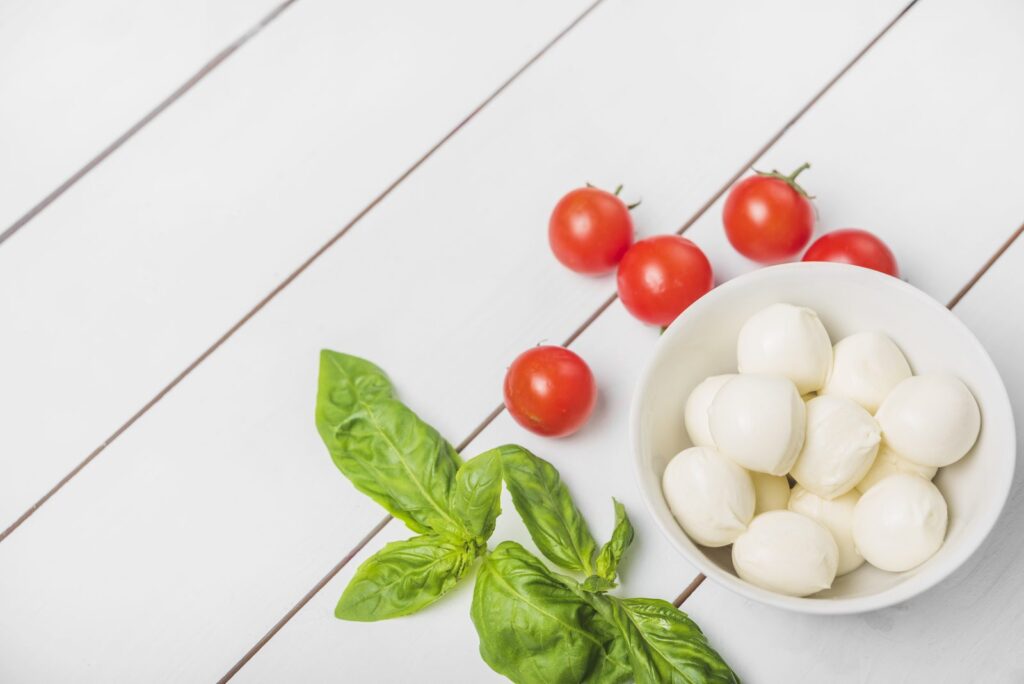
Yes, mozzarella is allowed during pregnancy if it is made with pasteurised milk. It is a fresh pasta filata (stretched-curd) cheese with no rind: it does not belong to the soft cheeses with a bloomy or washed rind that Santé publique France advises against. The criterion is the milk, stated on the packaging: the words « au lait cru » (raw milk) are compulsory when that is the case. Cooked, on a pizza or in a gratin, mozzarella is allowed in every case. Two points to watch: pre-grated mozzarella, which should only be eaten cooked, and burrata, which should be eaten very soon after opening.
These guidelines follow official French recommendations. If in doubt, your midwife or doctor can advise you.
The real risk: listeriosis
The bacterium Listeria monocytogenes is the reason some cheeses are not recommended during pregnancy. The infection is rare, with fewer than fifty cases a year in pregnant women in France according to Santé publique France, but serious for the baby. Listeria comes mainly from raw milk, and it has the particular feature of multiplying in the fridge. Pasteurising the milk and cooking both destroy it.
During pregnancy, Santé publique France advises against raw milk and raw-milk cheeses, except cooked pressed cheeses such as comté, soft cheeses with a bloomy or washed rind, blue cheeses, rinds and pre-grated cheese, which is more exposed to contamination during cutting. Pasteurised mozzarella, in a ball, falls into none of these categories.
The traffic-light guide to mozzarella
| Form | Pregnant | Why |
|---|---|---|
| Pasteurised cow’s milk mozzarella, in a ball | 🟢 allowed | pasteurised milk, no rind |
| Pasteurised mozzarella di bufala | 🟢 allowed | same rule; check the wording on the packaging |
| Cooked mozzarella: pizza, lasagne, gratin, croque | 🟢 allowed | cooking destroys Listeria |
| Raw-milk mozzarella, uncooked | 🔴 avoid | raw milk |
| Pre-grated mozzarella in a bag, uncooked | 🔴 avoid uncooked | pre-grated cheese not recommended; 🟢 once cooked on a pizza |
| Pasteurised burrata | 🟠 with conditions | very perishable creamy centre: eat on the day it is opened, well before the use-by date |
| Homemade caprese salad, with washed tomatoes and basil | 🟢 allowed | pasteurised mozzarella; vegetables and herbs washed thoroughly |
| Caprese salad in a restaurant | 🟠 with conditions | Ameli advises avoiding raw vegetables outside the home, because of toxoplasmosis |
| Ball opened several days ago | 🔴 avoid | Listeria multiplies in the cold |
Pizza is therefore no problem as far as the cheese is concerned, even with grated mozzarella, as long as it is cooked and served hot. Be careful, however, with toppings added after cooking: raw ham, rocket or burrata placed on the pizza when it comes out of the oven are not cooked.
Pizza when pregnant, topping by topping
Mozzarella is almost never the problem on a pizza: it cooks with the dough. It is the toppings, especially those added when it comes out of the oven, that make the difference. Here are the most common ones, checked against the official recommendations.
| Topping | Pregnant | Why |
|---|---|---|
| Mozzarella in a ball or grated, cooked on the pizza | 🟢 allowed | cooking destroys Listeria |
| Cooked ham baked with the pizza | 🟢 allowed | reheated right through, served hot |
| Raw ham cooked with the dough | 🟢 allowed | cooked through |
| Raw ham added after cooking | 🔴 avoid | raw cured meat: toxoplasmosis and listeriosis |
| Chorizo cooked on the pizza | 🟢 allowed | cooked at high temperature |
| Seafood cooked with the pizza | 🟢 allowed | shellfish cooked |
| Egg cracked onto the pizza, runny yolk | 🔴 avoid | egg not cooked enough: salmonella |
| Well-cooked egg, white and yolk set | 🟢 allowed | fully cooked |
| Parmesan shavings added after cooking | 🟢 allowed | cooked pressed cheese, allowed even when made with raw milk |
| Gorgonzola cooked on the pizza | 🟢 allowed | cooking destroys Listeria |
| Gorgonzola added raw after cooking | 🔴 avoid | blue cheeses are not recommended raw |
| Burrata placed on the pizza when it comes out of the oven | 🟠 with conditions | pasteurised and opened the same day |
| Raw rocket added at the end | 🟠 with conditions | washed well at home; in a restaurant, raw vegetables are not recommended |
In a restaurant, the simple rule is to ask for everything to be cooked with the pizza, and to have anything added raw at the end taken off. For the details, see our pages on raw ham when pregnant, chorizo when pregnant and soft-boiled egg when pregnant.
Other Italian cheeses during pregnancy
Mozzarella rarely travels alone in Italian cooking. Here is where its neighbours stand, according to the same Santé publique France rules:
| Cheese | Family | Pregnant |
|---|---|---|
| Parmesan, grana padano | cooked pressed cheese | 🟢 allowed, even when made with raw milk; better to grate it yourself than to buy it pre-grated |
| Mozzarella, di bufala | fresh pasta filata | 🟢 if pasteurised, or cooked |
| Ricotta | fresh cheese | 🟢 if pasteurised, or cooked |
| Mascarpone | fresh cheese | 🟢 if pasteurised; beware of desserts made with raw eggs such as tiramisu |
| Burrata, stracciatella | pasta filata with a creamy centre | 🟠 pasteurised, eaten on the day of opening |
| Gorgonzola | blue cheese | 🔴 raw; 🟢 cooked in a sauce or gratin |
| Taleggio | soft cheese with a washed rind | 🔴 raw, even if pasteurised; 🟢 cooked |
In terms of nutrients, these cheeses are very different: for a usual portion, parmesan is very rich in calcium but also salty, whereas mozzarella remains one of the least salty cheeses.
| Usual portion | Calcium | Salt |
|---|---|---|
| Cow’s milk mozzarella, half a ball of 60 g | 359 mg | 0.36 g |
| Grated parmesan, 10 g on pasta | 98 mg | 0.16 g |
| Grana padano, 10 g | 105 mg | 0.14 g |
| Gorgonzola, 30 g in a sauce | 117 mg | 0.57 g |
| Pecorino, 10 g | 116 mg | 0.53 g |
Pecorino, the Italian sheep’s milk cheese, is by far the saltiest: 5.3 g of salt per 100 g according to Ciqual, nearly nine times more than mozzarella. For tiramisu and its relatives, see our page on tiramisu when pregnant.
How much and how often
| For | Calories | Protein | Calcium | Iodine | Vitamin B12 |
|---|---|---|---|---|---|
| Half a ball, 60 g | 136 kcal | 9.9 g | 359 mg | 22 µg | 1.4 µg |
| One ball, 125 g | 284 kcal | 20.6 g | 748 mg | 47 µg | 2.9 µg |
| Mozzarella di bufala, 125 g | 325 kcal | 18.1 g | 325 mg | 38 µg | 0.6 µg |
| Burrata, 125 g | 324 kcal | 13.5 g | 260 mg | 46 µg | 0.5 µg |
Cow’s milk mozzarella is among the fresh cheeses richest in calcium: a 125 g ball provides 748 mg, almost the labelling reference value of 800 mg a day. It is also less salty than many cheeses, 0.6 g of salt per 100 g, compared with 2.27 g for feta. Half a ball counts as a good portion of dairy; a whole ball makes a rich meal, 284 kcal and 14.6 g of saturated fat.
Useful nutrients during pregnancy
- Calcium, for the baby’s bones and the mother’s: 359 mg per half ball.
- Protein, needs for which increase as pregnancy progresses.
- Iodine, needs for which are higher during pregnancy: 22 µg per half ball, against an adequate intake set at 200 µg a day by EFSA for pregnant women.
- Vitamin B12: 1.4 µg per half ball of cow’s milk mozzarella.
To go further, see our guides to foods high in calcium and foods high in iodine.
Safe recipe ideas
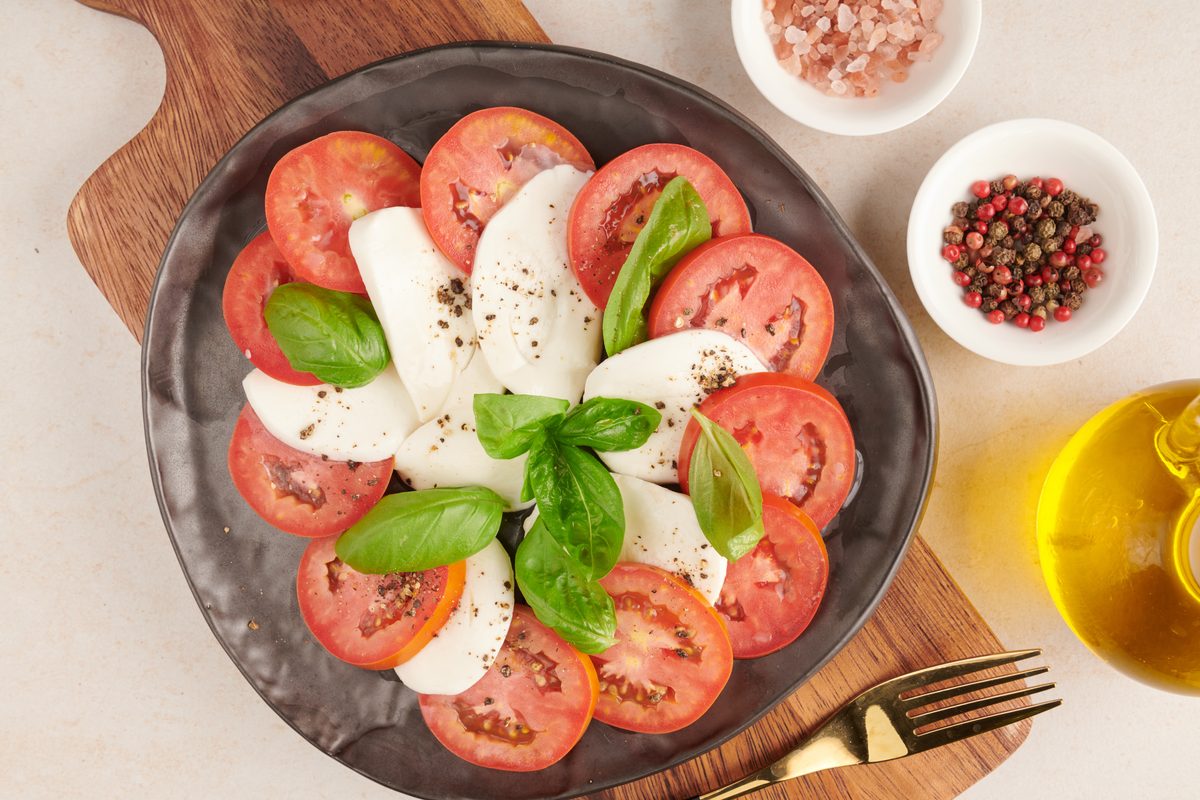
- Caprese salad, homemade with pasteurised mozzarella and well-washed tomatoes and basil.
- Lasagne: cooked mozzarella gratinated without risk.
- A homemade pizza with tomato, mozzarella and grilled vegetables, cooked and served hot.
- Provençal tomatoes with a little mozzarella melted in the oven.
The site’s recipes with mozzarella, checked
| Recipe | The mozzarella is | Pregnant |
|---|---|---|
| Thin-crust homemade pizza | baked in the oven | 🟢 whatever the milk |
| Parmigiana | baked in the oven, with the parmesan | 🟢 whatever the milk |
| Aubergine, tomato and mozzarella gratin | baked in the oven | 🟢 whatever the milk |
| Gnocchi gratin with tomato and mozzarella | gratinated | 🟢 whatever the milk |
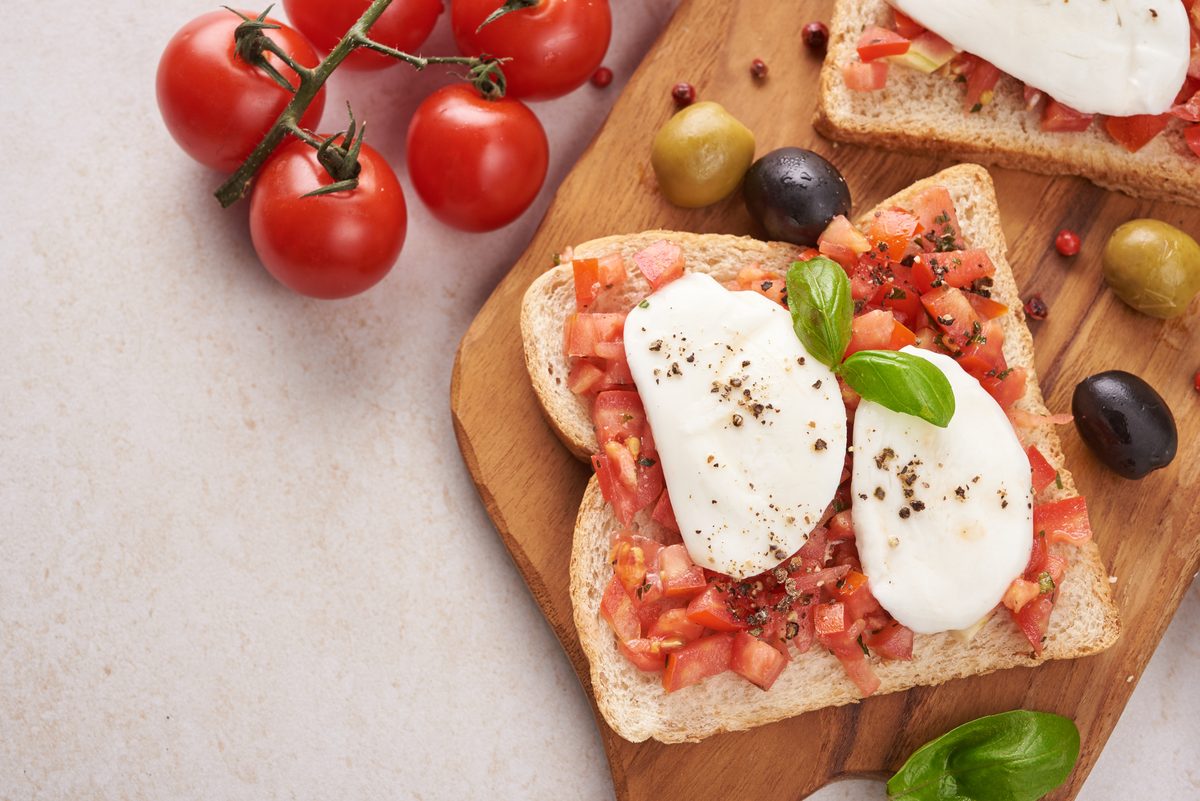
| Caprese salad | raw, sliced | 🟢 with pasteurised mozzarella and well-washed tomatoes and basil |
Storing mozzarella safely
Listeria has one particular feature that changes everything for fresh cheeses: it keeps multiplying in the fridge. A pasteurised mozzarella can therefore become a risk if it is badly stored. Ameli, in its pregnancy recommendations updated in June 2026, gives simple rules:
- a fridge set at 3 to 4 °C, cleaned regularly and disinfected with diluted bleach;
- never go past the use-by date, the DLC, shown on the packaging;
- do not keep leftovers for more than three days, and reheat them well if they are eaten hot;
- keep raw foods apart, meat and dirty vegetables, from cooked or ready-to-eat foods, such as cheeses.
For mozzarella, in practice this gives:
| Situation | Pregnant |
|---|---|
| Closed ball, before the use-by date, in the fridge | 🟢 no worries |
| Ball opened the same day | 🟢 no worries |
| Rest of a ball kept in its liquid, 1 to 2 days | 🟠 eat quickly, or cook |
| Leftover more than three days old | 🔴 throw away, or only cooked right through |
| Opened burrata or stracciatella | 🔴 do not keep |
| Mozzarella left for several hours at room temperature, on a buffet | 🟠 best avoided uncooked |
| Past the use-by date | 🔴 throw away |
The buffet is a frequent trap in summer: a caprese salad left waiting for hours in the sun, at a picnic or drinks party, no longer offers the same guarantees as a plate prepared at the moment of the meal. In that case, prefer hot dishes or cooked pressed cheeses.
Anses adds two useful tips: store risky foods, such as fresh cheeses, in the coldest zone of the fridge, and reheat dishes that are eaten hot to more than 70 °C at the centre. A lasagne or parmigiana from the day before, well reheated, is then safe again.
How much cheese a day when pregnant?
There is no pregnancy-specific guideline for cheese. The general guideline from Manger Bouger is two dairy products a day for adults, varying milk, yoghurt and cheese. Half a ball of mozzarella counts as a good portion; a whole ball, 125 g, equals a rich meal, at 284 kcal.
Mozzarella has the advantage of being low in salt and rich in calcium, which makes it one of the most useful cheeses during pregnancy, provided you follow the rule of pasteurised milk or cooking. To go further, see our guide to how much cheese per day.
And while breastfeeding?
While breastfeeding, the precautions against listeriosis that apply to pregnancy no longer apply: all mozzarellas and burrata become possible again. See our guide to eating while breastfeeding.
Frequently asked questions
Can you eat mozzarella when pregnant?
Yes, if it is made with pasteurised milk, which is indicated by the absence of the words « au lait cru » (raw milk). Cooked, it is allowed in every case.
Is mozzarella di bufala allowed when pregnant?
Yes if it is pasteurised: the rule is the same as for cow’s milk mozzarella. Check the label.
Can you eat burrata when pregnant?
A pasteurised burrata, very fresh and eaten on the day it is opened, is acceptable. Its creamy centre is very perishable: do not keep it once opened.
Is pizza allowed during pregnancy?
Yes, cooked and served hot, even with grated mozzarella. Avoid toppings added after cooking, such as raw ham.
Is grated mozzarella dangerous when pregnant?
Santé publique France advises against pre-grated cheese eaten as it is. Once cooked on a pizza or in a gratin, it is no longer a problem.
Can you eat pizza in a restaurant when pregnant?
Yes, if all the toppings are cooked with the pizza and it is served hot. Have anything added raw at the end taken off: raw ham, rocket, burrata, runny egg.
Is parmesan allowed when pregnant?
Yes, even when made with raw milk: it is a cooked pressed cheese. Grate it yourself rather than buying it already grated, unless you are going to cook it.
Is gorgonzola allowed when pregnant?
Raw, no: it is a blue cheese, not recommended during pregnancy. Cooked in a sauce, pasta or a gratin served hot, yes.
Is stracciatella allowed when pregnant?
It is the creamy centre of burrata: same rule, pasteurised and eaten on the day of opening.
Can you eat it when pregnant? The series
Food by food, what is allowed, allowed with conditions or best avoided during pregnancy: cheesecake when pregnant, foie gras when pregnant, feta when pregnant, raclette when pregnant, surimi when pregnant, cured meats when pregnant, smoked salmon when pregnant, tiramisu when pregnant, chorizo when pregnant, taramasalata when pregnant, honey when pregnant, camembert and brie when pregnant, prawns when pregnant, soft-boiled egg when pregnant, sushi when pregnant, raw ham when pregnant, hummus when pregnant, tinned tuna when pregnant.
Our sources
- Santé publique France, 1000 premiers jours website: « Les précautions alimentaires pendant la grossesse ».
- Manger Bouger (Santé publique France), « Quels aliments éviter et quelles précautions prendre quand on est enceinte ? », updated 2026.
- Ameli, « Les aliments à éviter et les précautions d’hygiène pendant la grossesse ».
- Santé publique France, listeriosis surveillance data; EFSA, reference values for iodine.
- Ciqual 2025 table (Anses): cow’s and buffalo milk mozzarella, burrata, feta; Regulation (EU) No 1169/2011: reference value for calcium.
- Manger Bouger (Santé publique France), dairy consumption guideline for adults.
- Ciqual 2025 table (Anses): parmesan, grana padano, gorgonzola, pecorino.
- Anses, « Qu’est-ce que la listériose et comment s’en prémunir ? ».
- Ameli, « Les aliments à éviter et les précautions d’hygiène pendant la grossesse », updated 19 June 2026.