Camembert and brie in pregnancy: not advised even pasteurised, unless cooked
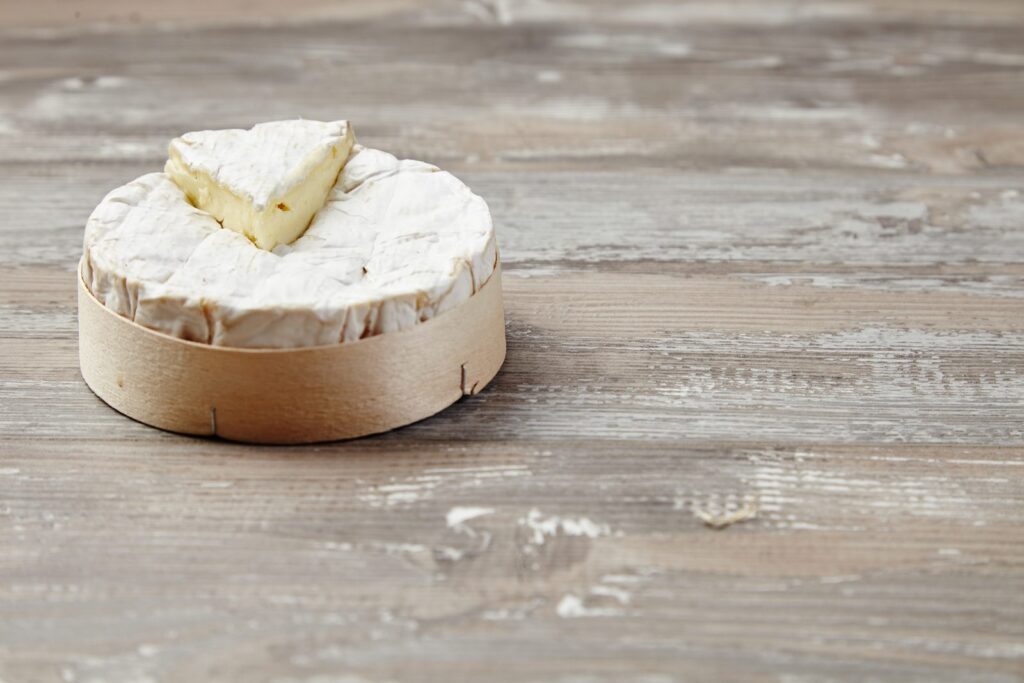
- Camembert and brie are not recommended during pregnancy, even when made with pasteurised milk, because of Listeria.
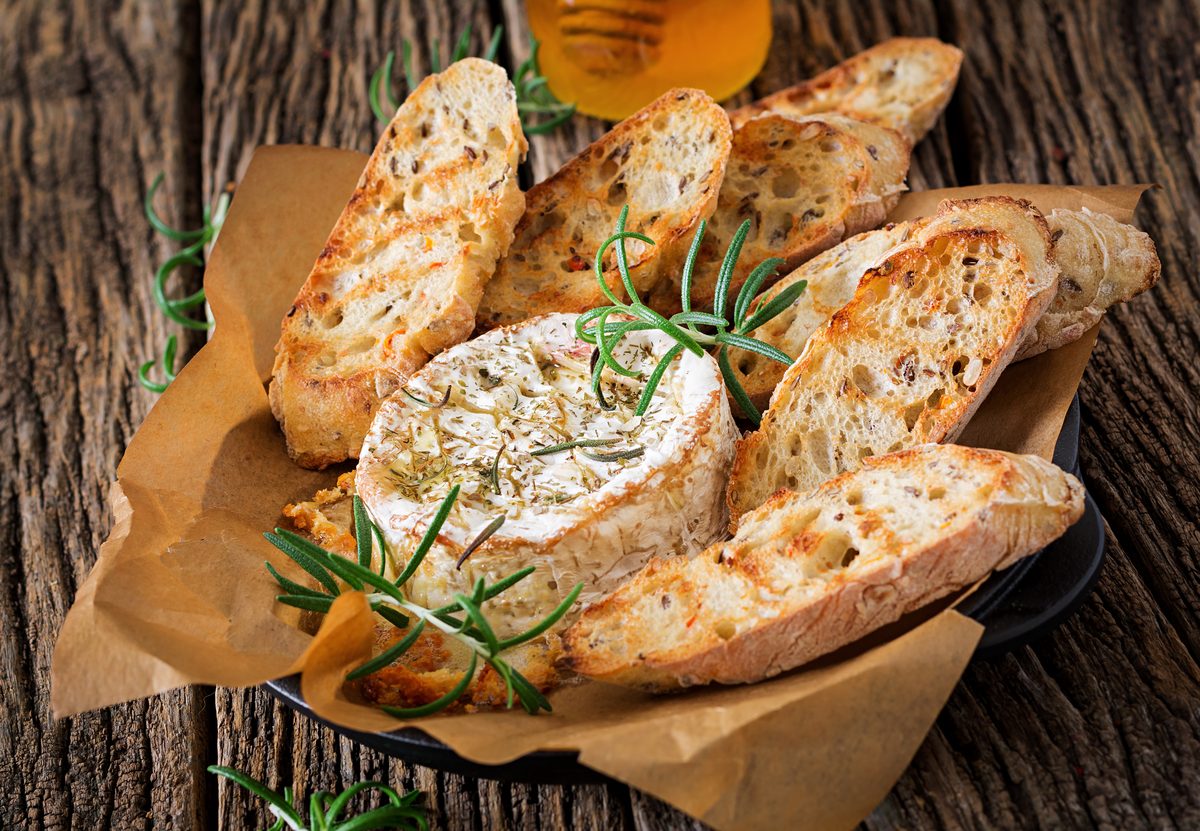
- Cooked until piping hot, they become possible again: baked camembert, brie en croûte, a tart served hot.
- In August 2025, 21 cases of listeriosis were linked to bloomy-rind cheeses made with pasteurised milk.
- Since 2021, RappelConso has listed 31 camembert recalls and 20 brie recalls for Listeria.
- For the cheeseboard: comté, emmental, beaufort, allowed even when made with raw milk, and richer in calcium.
The short answer
No, camembert and brie are not recommended during pregnancy, even when made with pasteurised milk, unless they are cooked until piping hot. Santé publique France lists soft, bloomy-rind cheeses among those to avoid, because of Listeria. Their rind and moist interior give this bacterium an environment where it can multiply, even in the fridge. Cooking destroys it: a camembert baked in the oven or a brie melted right through, served piping hot, is therefore possible. For a cheeseboard during pregnancy, choose cooked pressed cheeses, such as comté, emmental or beaufort, which are allowed even when made with raw milk.
The same rule applies to all cheeses in the family: coulommiers, chaource, carré de l’Est, and small bloomy-rind goat’s cheeses. It also applies to their washed-rind cousins: munster, maroilles, pont-l’évêque, livarot and époisses.
These guidelines follow the official French recommendations. If in doubt, your midwife or doctor can advise you.
Why they are not recommended, even pasteurised
For most cheeses, the pregnancy rule is about the milk: pasteurised, yes; raw, no. Soft cheeses with a bloomy or washed rind are the exception. Santé publique France’s 1000 premiers jours website states that it is “not recommended to eat soft cheeses with a bloomy or washed rind (camembert, brie, munster…)”, without distinguishing raw milk from pasteurised milk. The Anses sheet on Listeria monocytogenes also advises pregnant women to avoid soft cheeses with a bloomy rind, such as camembert and brie, and washed-rind cheeses, “especially if made with raw milk”: raw milk adds a risk, and pasteurised milk does not remove it.
The reason lies in the cheese itself. Pasteurisation destroys the bacteria present in the milk, but Listeria can contaminate the cheese afterwards: during moulding, ripening, turning, cutting or packaging. Anses stresses that this bacterium is able to persist in workshops and on equipment. Once in the cheese, a soft, moist interior allows it to multiply, even in the cold.
PDO cheeses add a second risk. Camembert de Normandie PDO and Brie de Meaux and Brie de Melun PDO are made with raw milk. But an industrial camembert or brie made with pasteurised milk is still a soft, bloomy-rind cheese: the recommendation applies to it too. The summer 2025 outbreak made this very concrete.
Summer 2025: 21 listeriosis cases linked to pasteurised-milk cheeses
In August 2025, Santé publique France, the Institut Pasteur’s National Reference Centre for Listeria and the Direction générale de l’alimentation identified 21 cases of listeriosis caused by genetically close strains, 18 of them since early June 2025. Two people died. Investigations established a possible link with cheeses from the Chavegrand cheese dairy, in the Creuse.
The detail that matters for a pregnant woman: the recalled products were all soft, bloomy-rind cheeses made with pasteurised milk, cow’s-milk camemberts and creamy cheeses, goat’s-milk logs, sold under many supermarket own brands. On 9 August 2025, the company recalled all batches made before 23 June. On RappelConso, 17 recall notices for camembert and 8 for coulommiers were published between 9 and 12 August 2025, at the time of this outbreak.
Those who fell ill in this outbreak were aged 34 to 95, 18 of them over 65: no pregnant woman was reported. But it illustrates exactly what the recommendations say: a pasteurised-milk bloomy-rind cheese can be contaminated.
What product recalls have shown since 2021
On RappelConso, the official product recall website, we collected every recall notice whose title contains “camembert”, “brie” or “coulommiers” and whose reason mentions Listeria:
| Cheese | Recalls for Listeria | What we see |
|---|---|---|
| Camembert | 31 | including 17 published from 9 to 12 August 2025; also microfiltered-milk camemberts and raw-milk Camembert de Normandie PDO |
| Brie | 20 | including 13 since July 2026, under several brands, among them an organic pasteurised-milk brie; also Brie de Meaux and raw-milk bries |
| Coulommiers | 17 | including 8 published from 9 to 12 August 2025 |
These figures do not measure the risk of eating a camembert: millions are sold every year, and a recall is often preventive. They do show, however, that contamination affects every category: raw or pasteurised milk, microfiltered, PDO cheese or supermarket own brand, organic or conventional. This is why the recommendation makes no distinction. If you have doubts about a cheese in your fridge, you can search for its name on rappel.conso.gouv.fr.
Why the fridge is not enough
Listeria stands out from most foodborne bacteria through its resistance to cold. According to the Anses sheet:
| Characteristic of Listeria monocytogenes | Value |
|---|---|
| Minimum growth temperature | minus 2°C |
| Ideal temperature | 30 to 37°C |
| Salt | about 12% salt is needed to stop it growing |
| Recommended fridge temperature | 4°C at most |
In the fridge, Listeria therefore multiplies slowly rather than stopping. A cheese ripened for several weeks, then kept until its use-by date, gives it time to go from a tiny quantity to a dangerous one. Cold remains useful, and Anses recommends setting your fridge to 4°C at most, but it does not make a raw bloomy-rind cheese safe.
Removing the rind is not enough either: contamination can reach the interior, which is precisely the favourable environment. And in a runny cheese, the rind and the centre cannot be cleanly separated anyway.
Listeriosis in pregnancy, in figures
Listeriosis is rare, but serious. The Anses sheet draws on Santé publique France data:
- around 350 to 400 cases a year in France, across the whole population;
- 29 to 50 maternal-neonatal forms a year between 2009 and 2019, or 9 to 15% of cases;
- a fatality rate for the foetus and newborn of 15 to 34% depending on the year in these forms;
- a long incubation: 17 to 67 days for maternal-neonatal forms, 28 days on median.
In a pregnant woman, the infection often looks like ordinary flu: fever, chills, back pain. Yet the bacterium can cross the placenta and cause miscarriage, intrauterine death, premature birth or a serious infection in the newborn. It is this gap between an illness that is sometimes barely noticeable in the mother and heavy consequences for the baby that justifies the caution.
The traffic-light guide
| Form | Pregnant | Why |
|---|---|---|
| Raw-milk camembert or brie, uncooked | 🔴 avoid | raw milk and a soft, bloomy-rind cheese |
| Pasteurised or microfiltered-milk camembert or brie, uncooked | 🔴 avoid | soft, bloomy-rind cheese, not recommended whatever the milk |
| Camembert or brie without its rind | 🔴 avoid | the interior itself can be contaminated |
| Coulommiers, chaource, carré de l’Est, bloomy-rind goat’s cheese log | 🔴 avoid uncooked | same family of cheeses |
| Baked camembert or oven-baked brie, centre piping hot and runny | 🟢 allowed | cooking destroys Listeria |
| Camembert or brie in a tart, quiche, croque, puff pastry, served hot | 🟢 allowed | heated right through |
| Cooked pressed cheeses: comté, emmental, beaufort, gruyère | 🟢 allowed | even made with raw milk, according to Santé publique France; without the rind |
| Pasteurised fresh cheeses: fresh goat’s cheese, fromage blanc, ricotta | 🟢 allowed | pasteurised milk, no rind |
| Munster, maroilles, pont-l’évêque, mont-d’or, blue cheeses | 🔴 avoid uncooked | soft washed-rind cheeses, blue-veined cheeses |
Cooking camembert or brie safely
Cooking is the only way to make these cheeses safe. Listeria does not withstand heat: according to the measurements cited by Anses, in milk at 65°C it takes only 0.2 to 2 minutes to reduce the number of bacteria tenfold, and the effect is faster the higher the temperature climbs. A lukewarm or barely melted cheese is therefore not enough: it must be piping hot right through, not just on the surface.
- Baked camembert: in the oven, in its wooden box or a small dish, until the centre is completely liquid and steams when you open it. Push a knife into the centre: if any part is still firm or lukewarm, cook it for longer.
- Brie en croûte, brie in puff pastry: the pastry can brown before the cheese is hot right through, especially with a large wedge. Prefer small portions.
- Tarts, quiches, croques, camembert tartiflette: no risk if served hot, straight from the oven.
- In the microwave: the heat is uneven. Stir or cut the cheese to check that no cold part remains.
Two pitfalls to avoid. First, eat it hot, straight away: Anses points out that a cooked food can be recontaminated during handling after cooking. A baked camembert that has cooled and been put back in the fridge is no longer a “safe” cooked food. Second, the chopping board: if the rest of the table is eating raw brie, use a separate knife and board for your cooked portion or your other cheeses.
What camembert and brie contain
| 30 g of | Calories | Protein | Calcium | Salt | Saturated fat |
|---|---|---|---|---|---|
| Camembert | 84 kcal | 5.9 g | 132 mg | 0.44 g | 4.7 g |
| Brie | 104 kcal | 5.3 g | 126 mg | 0.43 g | 6.5 g |
| Comté, allowed | 124 kcal | 8.3 g | 272 mg | 0.25 g | 6.5 g |
| Emmental, allowed | 112 kcal | 8.4 g | 293 mg | 0.18 g | 5.9 g |
For calcium, whose requirements stay high during pregnancy, comté and emmental actually do better: twice as much calcium for the same portion, and less salt. Replacing camembert and brie for nine months therefore creates no shortfall. Camembert is slightly lighter than brie, 84 kcal against 104 per 30 g, with less saturated fat, but this difference does not change the pregnancy rule. See our ranking of foods high in calcium and our guide on how much cheese a day.
A safe cheeseboard during pregnancy
- Cooked pressed cheeses, even made with raw milk: comté, beaufort, emmental, gruyère, abondance, without their rind.
- Pasteurised fresh cheeses: fresh goat’s cheese, fresh herb cheese, pasteurised feta and mozzarella.
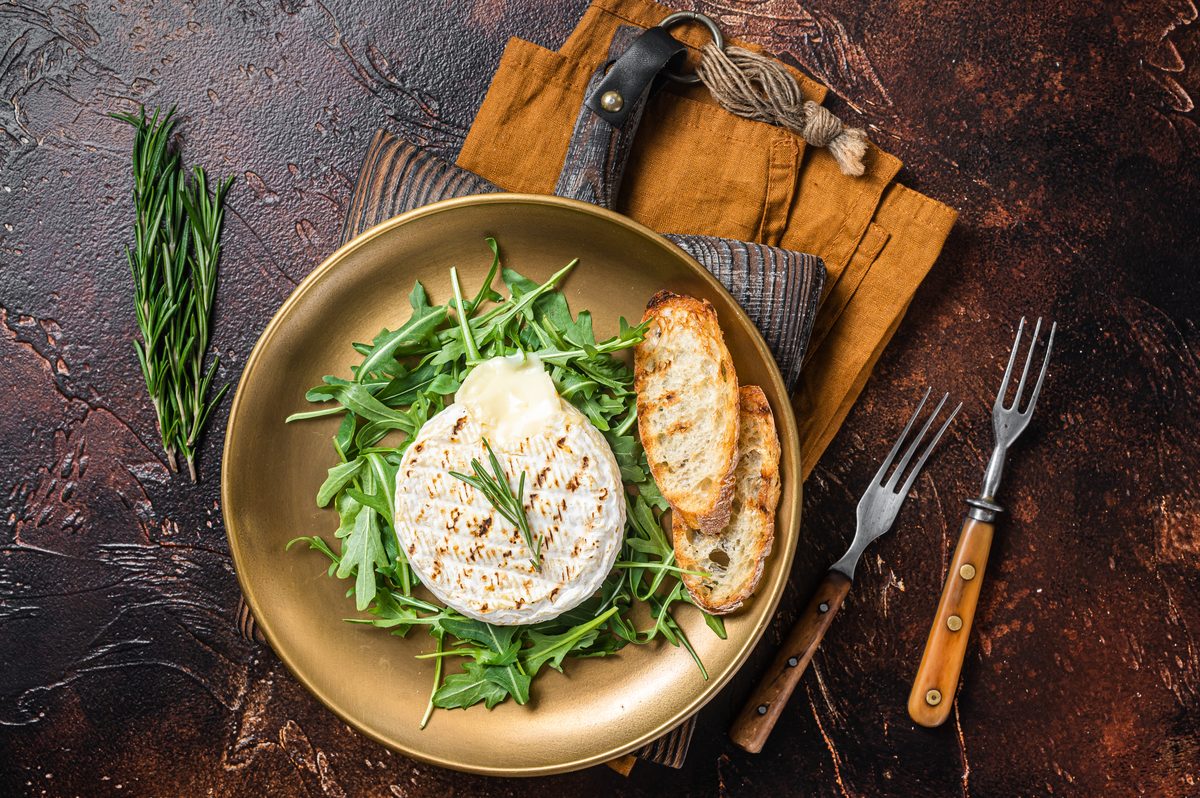
- A baked camembert or oven-baked brie, served piping hot with potatoes or toasted bread, if you cannot do without.
For a festive meal, baked camembert lets you share the same dish as everyone else at the table. As for sliced cheeses, cheese sold pre-grated is also not recommended by Santé publique France: grate your own comté or emmental. See also our guides on feta in pregnancy, mozzarella in pregnancy, raclette in pregnancy and eating during pregnancy.
I ate some without knowing: what should I do?
Don’t panic. A one-off consumption carries a low risk, and the vast majority of camemberts and bries contain no Listeria. There is no test or treatment to have “as a precaution” if you feel well. Three steps are enough:
- check on RappelConso whether the cheese you ate has been recalled; if so, tell your doctor or midwife;
- watch for a fever, even a mild one, or flu-like symptoms, over the following two months, since the incubation period can reach 67 days;
- if you develop a fever, see a doctor promptly and say that you ate a high-risk cheese: listeriosis is diagnosed with a blood test and treated with antibiotics.
And while breastfeeding?
While breastfeeding, the listeriosis precautions specific to pregnancy no longer apply: camembert and brie become possible again, whether made with raw or pasteurised milk. See our guide on eating while breastfeeding.
Frequently asked questions
Can you eat camembert when pregnant?
Uncooked, no, even if made with pasteurised milk: it is a soft, bloomy-rind cheese, not recommended by Santé publique France. Cooked until piping hot, yes.
Can you eat brie when pregnant?
Same answer as for camembert: no if uncooked, whatever the milk; yes if cooked and served piping hot, in a tart, in puff pastry or baked.
Is pasteurised camembert or brie allowed in pregnancy?
No: for soft bloomy-rind cheeses, the recommendation applies whatever the milk, because Listeria can contaminate the cheese after pasteurisation. In August 2025, 21 cases of listeriosis were linked to cheeses of this type made with pasteurised milk.
Is cooked camembert allowed in pregnancy?
Yes, if heated right through until piping hot and eaten straight away: baked camembert, tart or croque served hot.
What about coulommiers or chaource?
These are also soft, bloomy-rind cheeses: the same rules as camembert and brie. Coulommiers has had 17 recalls for Listeria on RappelConso since 2021.
Is removing the rind enough?
No: the interior can also be contaminated, and it is the interior that gives the bacterium a favourable environment.
Which cheeses can you eat when pregnant?
Cooked pressed cheeses such as comté, even made with raw milk, and all pasteurised cheeses that are neither soft with a bloomy or washed rind, nor blue cheeses, nor sold pre-grated.
I ate camembert or brie while pregnant, what should I do?
The risk from a one-off consumption is low. If you develop a fever in the following two months, even a mild one, tell your doctor or midwife.
Can you eat it in pregnancy? The series
Food by food, what is allowed, allowed with conditions or best avoided during pregnancy: cheesecake in pregnancy, foie gras in pregnancy, feta in pregnancy, mozzarella in pregnancy, raclette in pregnancy, surimi in pregnancy, cured meats in pregnancy, smoked salmon in pregnancy, tiramisu in pregnancy, chorizo in pregnancy, taramasalata in pregnancy, honey in pregnancy, prawns in pregnancy, soft-boiled eggs in pregnancy, sushi in pregnancy, cured ham in pregnancy, hummus in pregnancy, tinned tuna in pregnancy.
Our sources
- Santé publique France, 1000 premiers jours website: « Les précautions alimentaires pendant la grossesse ».
- Manger Bouger (Santé publique France), « Quels aliments éviter et quelles précautions prendre quand on est enceinte ? », updated 2026.
- Anses, description sheet for a foodborne biological hazard: Listeria monocytogenes, referral 2016-SA-0081, updated April 2020.
- Santé publique France, « Cas de listériose possiblement liés à la consommation de fromages au lait pasteurisé produits par la société Chavegrand », update of 13 August 2025; Ministry of Agriculture, press release of 12 August 2025.
- RappelConso, public product recall dataset (data.economie.gouv.fr): camembert, brie, coulommiers, July 2021 to September 2026.
- Ameli, foods to avoid during pregnancy.
- Ciqual 2025 table (Anses): camembert, brie, comté, emmental.