Highest-protein foods: ranked per portion and per calorie
The short answer
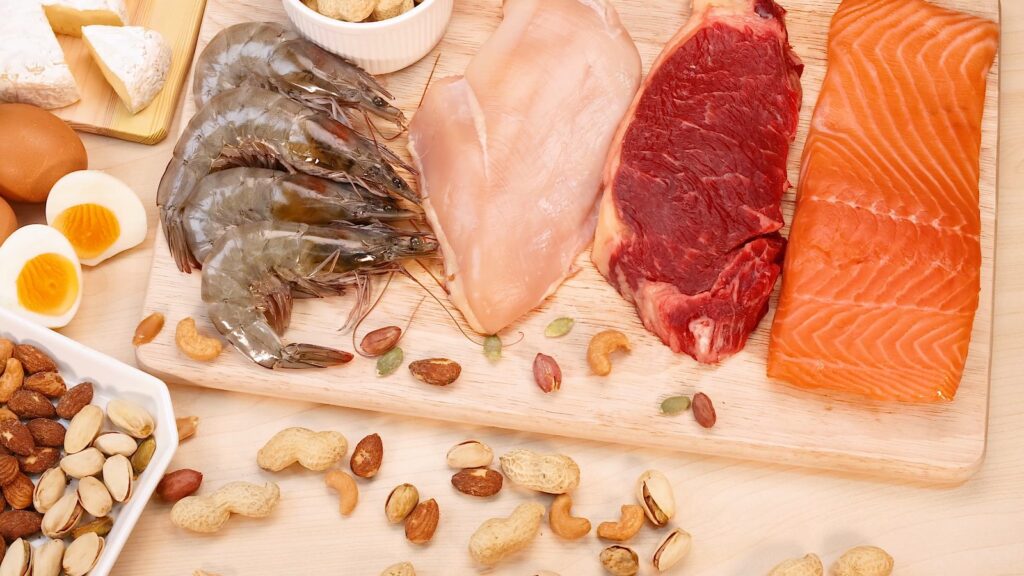
Per portion, squid comes first with 32.5 g of protein per 100 g, followed by veal escalope, tuna and turkey escalope, at around 30 g. Per calorie, the champions are white fish: pollock provides 24.9 g of protein per 100 kcal, cod 23.3 g. Among plant foods, seitan (20.6 g per 100 g) and pulses (15 g per portion of lentils) are the best sources.
Meat, fish and eggs
| Food | Portion | Protein | Calories | Protein per 100 kcal |
|---|---|---|---|---|
| Squid, cooked | 100 g | 32.5 g | 149 kcal | 21.8 g |
| Veal escalope, cooked | 100 g | 31 g | 147 kcal | 21.1 g |
| Tuna, cooked | 100 g | 29.9 g | 136 kcal | 22 g |
| Turkey escalope, grilled | 100 g | 28.5 g | 124 kcal | 23 g |
| Beef steak, grilled | 100 g | 27.6 g | 128 kcal | 21.6 g |
| Sardine, grilled | 100 g | 25.1 g | 194 kcal | 12.9 g |
| Pollock, cooked | 100 g | 24.4 g | 98 kcal | 24.9 g |
| Minced beef steak, cooked | 100 g | 23.8 g | 229 kcal | 10.4 g |
| Cod, cooked | 100 g | 23.3 g | 100 kcal | 23.3 g |
| Salmon, cooked | 100 g | 23.2 g | 205 kcal | 11.3 g |
| Prawns, cooked | 100 g | 22.5 g | 100 kcal | 22.5 g |
| Cooked ham | 100 g | 19.5 g | 125 kcal | 15.6 g |
| Hard-boiled eggs | 2 eggs, 100 g | 13.5 g | 134 kcal | 10.1 g |
| Egg white, cooked | 100 g | 10.3 g | 47 kcal | 21.8 g |
White fish, the best protein-to-calorie ratio
Weight for weight, salmon and pollock provide almost the same amount of protein (23.2 and 24.4 g), but salmon contains twice the calories: 205 against 98 kcal. Pollock, cod and prawns exceed 22 g of protein per 100 kcal. If you want to increase your protein while keeping calories under control, this is where to start.
Minced steak and salmon, high in protein but fattier
Minced steak (23.8 g) and salmon (23.2 g) remain good sources, with half as much protein per calorie as grilled steak or cod. That is not a flaw in itself: salmon is also one of the best sources of omega-3, with 2 g of EPA and DHA per 100 g.
Plant foods and dairy
| Food | Portion | Protein | Calories | Protein per 100 kcal |
|---|---|---|---|---|
| Seitan | 100 g | 20.6 g | 134 kcal | 15.4 g |
| Tempeh | 100 g | 16.1 g | 157 kcal | 10.3 g |
| Lentils, cooked | 150 g | 15.2 g | 188 kcal | 8.1 g |
| Kidney beans, cooked | 150 g | 14.4 g | 174 kcal | 8.3 g |
| Plain tofu | 100 g | 13.4 g | 147 kcal | 9.1 g |
| Chickpeas, cooked | 150 g | 12.5 g | 222 kcal | 5.6 g |
| Oats | 60 g | 10.1 g | 227 kcal | 4.5 g |
| Parmesan | 30 g | 9.3 g | 123 kcal | 7.6 g |
| Hemp seeds | 30 g | 9.2 g | 185 kcal | 5 g |
| Pumpkin seeds | 30 g | 8.9 g | 185 kcal | 4.8 g |
| Semi-skimmed milk | 250 ml | 8.7 g | 119 kcal | 7.3 g |
| Emmental | 30 g | 8.4 g | 112 kcal | 7.5 g |
| Fromage blanc 0% | 100 g | 7.3 g | 48 kcal | 15.2 g |
| Almonds | 30 g | 5.6 g | 185 kcal | 3.1 g |
| Plain yoghurt | 125 g | 4.6 g | 91 kcal | 5.1 g |
Pulses, the plant-based foundation
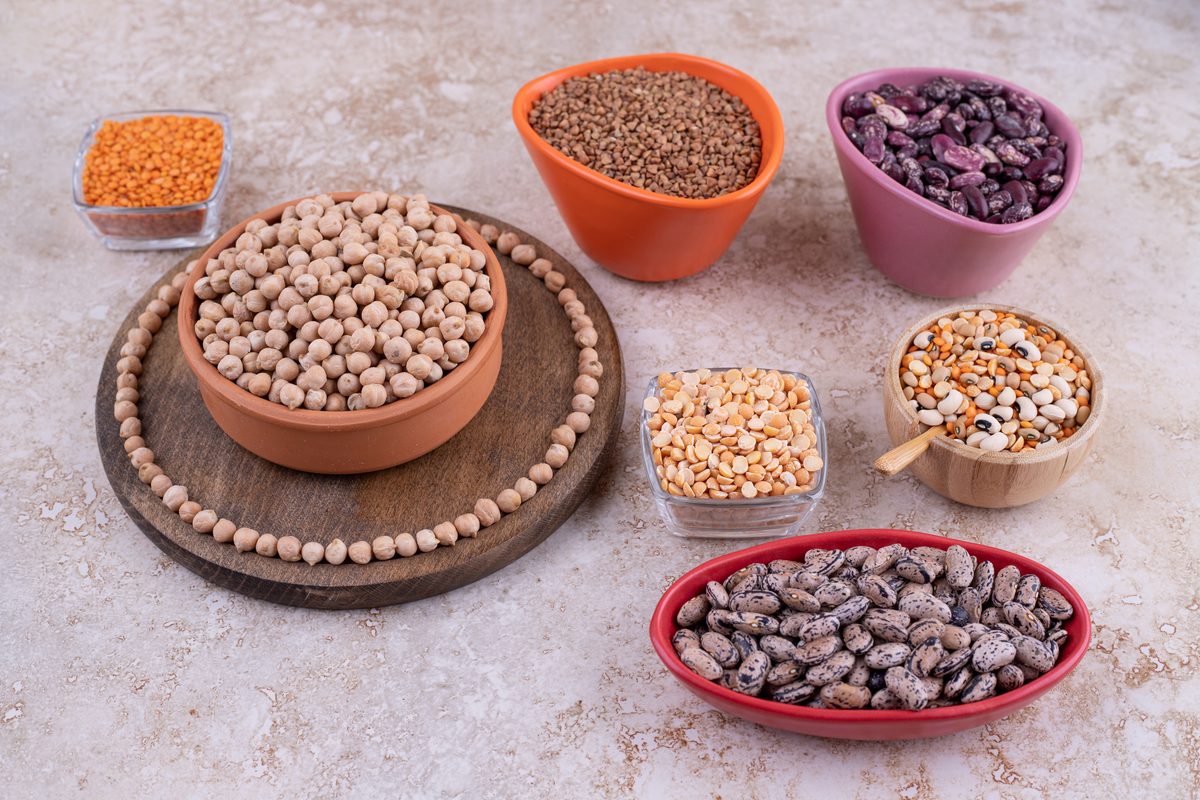
A portion of lentils or kidney beans provides 14 to 15 g of protein, as much as half a steak, with fibre on top. Seitan, made from wheat protein, is the most concentrated plant source in the table. Combining pulses and cereals during the day completes the amino acids: the detail is in our guide to plant proteins.
Seeds and nuts, high in protein but high in calories
Hemp and pumpkin seeds contain about 30 g of protein per 100 g, as much as meat. But a 30 g portion provides only 9 g, for 185 kcal: a good addition, not a foundation.
How much protein per day
Anses sets the reference for a healthy adult at 0.83 g of protein per kilo of body weight per day, or 58 g for a 70 kg person. It considers intakes of up to 2.2 g/kg satisfactory before age 60, which means that the higher intakes of an athlete stay within the norm.
58 g is an ordinary day: a bowl of milk at breakfast (8.7 g), 100 g of turkey escalope at lunch (28.5 g), 150 g of lentils at dinner (15.2 g) and a yoghurt (4.6 g), making 57 g, not counting bread and cereals. The role of protein in satiety and muscle mass is detailed in our guide to protein, building and satiety. Powders are compared in our comparisons of whey and plant protein.
Frequently asked questions
Which food is richest in protein?
Among foods eaten in portions, cooked squid (32.5 g per 100 g), veal escalope (31 g) and tuna (29.9 g).
Which food has the most protein for the fewest calories?
Pollock: 24.9 g of protein per 100 kcal, then cod, turkey escalope and prawns.
Which plant food is richest in protein?
Seitan (20.6 g per 100 g), then tempeh and tofu. Per typical portion, lentils provide 15.2 g.
How much protein is in an egg?
About 6.8 g for a 50 g hard-boiled egg, according to Ciqual (13.5 g per 100 g).
How much protein per day?
Anses sets 0.83 g per kilo per day for a healthy adult, or 58 g for 70 kg, and considers intakes of up to 2.2 g/kg satisfactory before age 60.
The other rankings
Same method, based on the Ciqual table: foods rich in iron, foods rich in magnesium, foods rich in potassium, foods rich in calcium, foods rich in zinc, foods rich in selenium, foods rich in iodine, foods rich in vitamin B12, foods rich in vitamin C, foods rich in vitamin D, foods rich in omega-3, high-fibre vegetables, least sugary fruits.
Our sources
- Table Ciqual 2025 (Anses), Protein column (Jones factor) in g/100 g, cross-checked with the site’s food pages.
- Anses, Protein intake: consumption, quality, needs and recommendations (in French).