How many seeds per day? What 30 g of each seed provides
The short answer
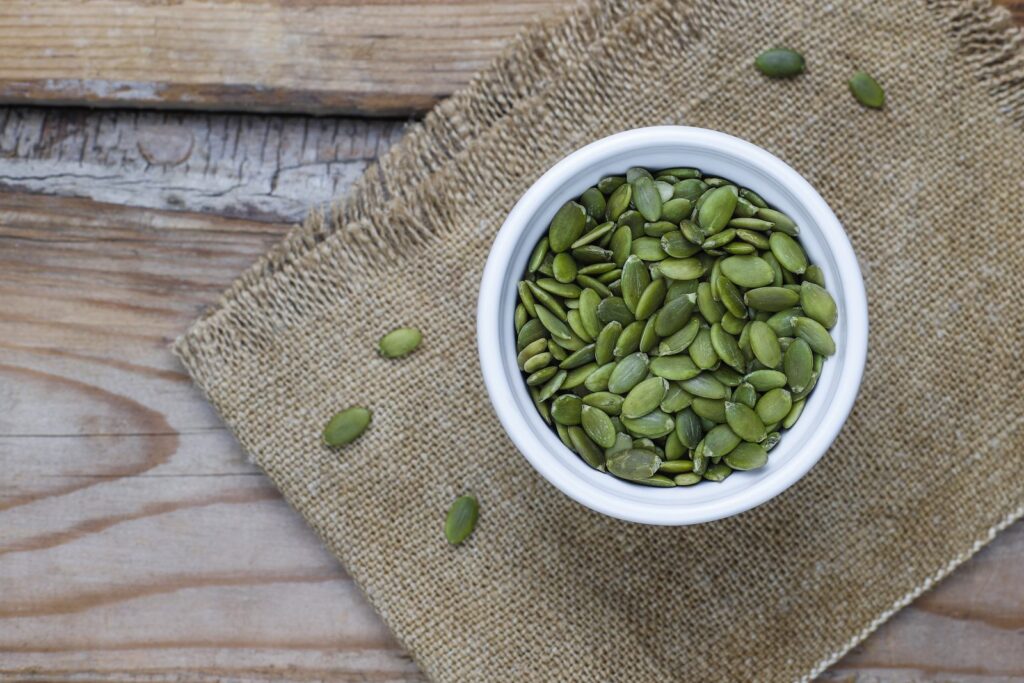
No health authority sets a daily amount of seeds. The only limit that existed, 15 g a day for chia, was removed by the European Union in 2020. A portion of 10 to 30 g is a reasonable basis: it is enough for a useful intake, and 30 g of seeds already represents 136 to 196 kcal. The choice of seed matters more than the quantity: chia and flax for fibre and omega-3, pumpkin and hemp for magnesium and protein, sesame for calcium.
What 30 g of each seed provides
| 30 g of | Calories | Fibre | Protein | Omega-3 (ALA) | Magnesium | Calcium |
|---|---|---|---|---|---|---|
| Chia | 136 kcal | 10.3 g | 5 g | 5.3 g | 101 mg | 189 mg |
| Flax | 158 kcal | 7.3 g | 5.7 g | 5.9 g | 101 mg | 67 mg |
| Pumpkin | 185 kcal | 1.8 g | 8.9 g | 0.04 g | 178 mg | 14 mg |
| Hemp, hulled | 185 kcal | 1.2 g | 9.2 g | 2.6 g | 210 mg | 21 mg |
| Sunflower | 196 kcal | 1.9 g | 6.4 g | 0.05 g | 109 mg | 23 mg |
| Sesame | 182 kcal | 3.5 g | 5.3 g | 0.08 g | 97 mg | 289 mg |
Seed by seed
Chia: fibre
30 g of chia provide 10.3 g of fibre, a third of the daily reference, and 5.3 g of ALA, more than twice the reference intake for plant omega-3. It is also the lowest-calorie seed in the table, at 136 kcal. For your gut, start with a spoonful and increase gradually, drinking enough fluid.
Flax: omega-3
Flax is the seed richest in ALA: 5.9 g per 30 g. An important reminder: this plant omega-3 is converted very poorly into DHA, and does not replace fish, as explained in our guide to foods rich in omega-3.
Pumpkin and hemp: magnesium and protein
30 g of hulled hemp seeds provide 210 mg of magnesium, 70% of a woman’s reference intake, and 9.2 g of protein. Pumpkin follows with 178 mg and 8.9 g. These are the seeds richest in magnesium and protein in the table, see our ranking of foods rich in magnesium.
Sesame: calcium
With 289 mg of calcium per 30 g, sesame covers nearly a third of the 950 mg reference, as much as a large glass of milk. It is by far the seed richest in calcium in the table, as our ranking of foods rich in calcium shows.
Why not eat more
The limit has less to do with toxicity than with density: between 454 and 653 kcal per 100 g. Three 30 g portions over the day come to 400 to 590 kcal, 20 to 30% of a 2,000 kcal ration. For nuts, the PNNS advises a small handful a day; applying the same measure to seeds is a good rule. If you are looking for more fibre, pulses remain more effective, see our ranking of high-fibre vegetables.
Whole or ground flax: what changes
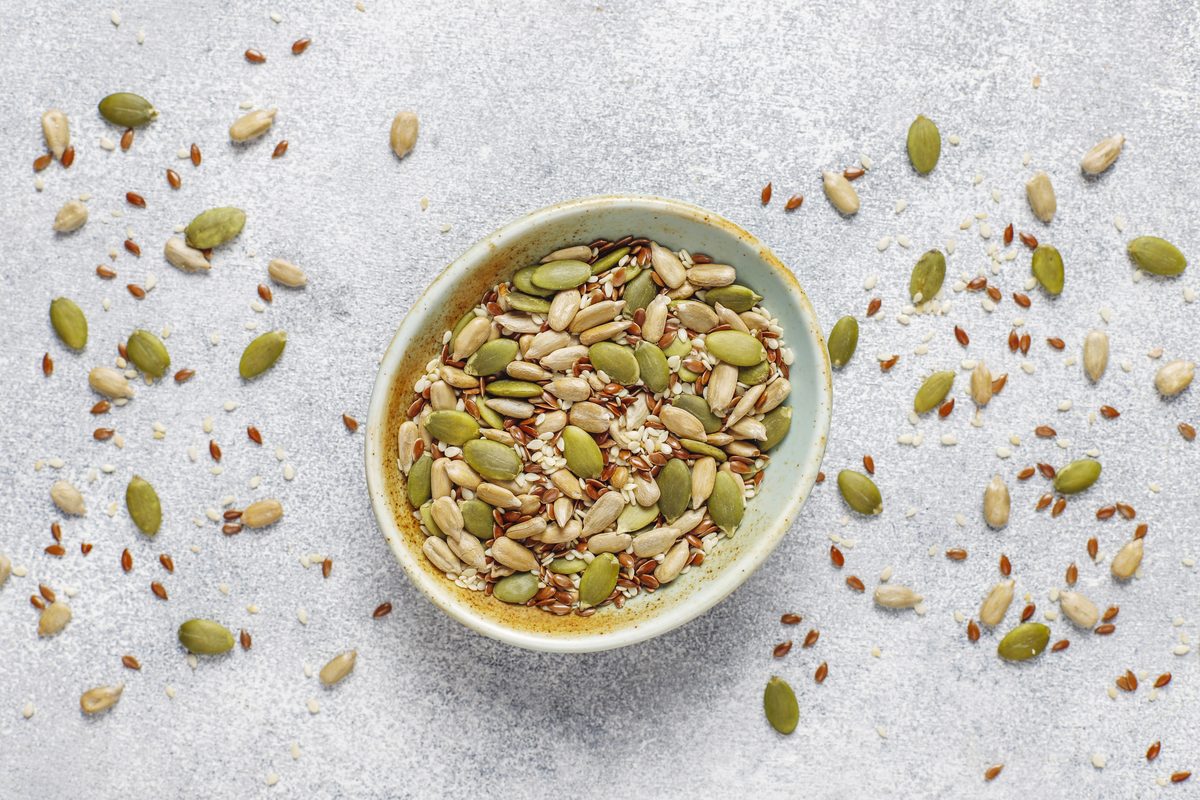
Flax seeds have a hard coat, which the gut does not always digest. A Canadian study published in 2008 compared three forms of flax, baked into muffins for three months: 30 g of whole seeds, 30 g of ground seeds, or flax oil providing 6 g of ALA.
- With the oil and with the ground seeds, blood ALA levels rose clearly from the first month, more so with the oil.
- With the whole seeds, they did not rise significantly.
- None of the three forms raised EPA or DHA, the long-chain omega-3s found in fish.
- All groups had some digestive upset at the start. It disappeared with the oil and the ground seeds, and the whole-seed group struggled to follow the protocol.
The practical consequence is simple: to benefit from the omega-3 in flax, grind it or buy it already ground. Whole, the seeds did not raise ALA in the participants’ blood. This study only covered flax: it says nothing about chia.
Flax and cyanide: what EFSA says
Like bitter almonds or cassava, flax seed contains cyanogenic glycosides, compounds that release cyanide when the seed is crushed or chewed. EFSA assessed this risk in a 2019 opinion.
It sets an acute reference dose of 20 µg of cyanide per kilo of body weight, not to be exceeded in one sitting. It also notes, based on a human study, that flax releases its cyanide far less completely than bitter almonds or cassava: it therefore divides flax’s levels by 3 in its calculations. Taking that factor into account, EFSA calculated that a heavily loaded ground flax, at 407 mg of cyanide per kilo, would reach the reference dose at 1.3 to 14.7 g depending on the consumer’s weight, with the smallest amounts applying to the youngest children.
These figures correspond to the most heavily loaded batches, not an average content, and to a deliberately cautious reference dose. According to the same assessment, average dietary exposure to cyanide does not exceed this dose in any age group. What can be taken from it:
- Ground flax is still an everyday food, but not one to eat in large quantity all at once: one more reason to stick to a moderate portion and vary your seeds.
- For a young child, whose body weight is low, the amounts that reach the reference dose are the lowest: small quantities, mixed into a dish, are better.
Whole sesame, hulled sesame or tahini
Sesame is cited for its calcium. But the Ciqual table shows that everything depends on the form you buy:
| 30 g of | Calories | Calcium | Iron | Fibre |
|---|---|---|---|---|
| Whole sesame | 182 kcal | 289 mg | 4.4 mg | 3.5 g |
| Hulled sesame | 186 kcal | 18 mg | 1.9 mg | 3.5 g |
| Hulled sesame, roasted | 175 kcal | 39 mg | 2.3 mg | 5.1 g |
| Tahini (sesame paste) | 189 kcal | 85 mg | 2 mg | 2.1 g |
Most of the calcium is in the hull: hulled sesame, the paler kind, contains sixteen times less than whole sesame. Tahini sits in between. If you are counting on sesame for calcium, choose whole, darker seeds, and check the label. Sesame is one of the 14 allergens in Annex II of European Regulation No 1169/2011: it must be flagged in the ingredients list, even in small amounts.
Seed oils
When pressed, some seeds give oils very different from the whole seed:
- Flax oil: 53.4 g of ALA per 100 g, the richest of all. 10 g provide 5.3 g, more than twice the daily reference of 2.2 g.
- Sesame oil: only 0.38 g of ALA per 100 g. It is a flavouring oil, not a source of omega-3.
An oil keeps neither the fibre nor the protein of the seed. For everyday omega-3, Anses recommends in its 2016 opinion a daily intake of oils rich in ALA, such as rapeseed or walnut oil; the detail is in our guide how many walnuts per day.
What the studies say
Flax and blood pressure
This is the most studied effect. In the Canadian FlaxPAD trial, published in 2013, 110 patients with peripheral artery disease ate foods containing 30 g of ground flax, or a placebo, every day for six months. Systolic pressure was about 10 mmHg lower and diastolic 7 mmHg lower in the flax group, with no difference in weight. In those whose systolic pressure exceeded 140 mmHg at the start, the drop reached 15 mmHg.
A meta-analysis published in 2025, which brought together 18 trials and 1,209 participants with metabolic diseases, confirms a more modest effect: 4.3 mmHg less for systolic and 2.5 mmHg for diastolic, with strong heterogeneity between trials.
Chia
The data are thinner. A meta-analysis of 8 trials, published in 2025, found a drop in blood pressure, 7.2 mmHg for systolic, but no effect on weight, waist circumference, body fat, fasting blood sugar or glycated haemoglobin. Another, from 2024, covering 8 trials and 362 participants, found no effect on blood sugar or insulin. The authors stress the small number of studies in both cases.
These results do not make seeds a treatment. If you have high blood pressure, your treatment and medical follow-up remain the reference; seeds can be added to a DASH diet, not replace it.
Iron and zinc in seeds
The table at the start of this guide does not show two minerals where seeds do well: iron and zinc. To put them in context, here are the European labelling reference values, 14 mg for iron and 10 mg for zinc:
| 30 g of | Iron | Share of the 14 mg | Zinc | Share of the 10 mg |
|---|---|---|---|---|
| Whole sesame | 4.4 mg | 31% | 1.7 mg | 17% |
| Pumpkin | 2.6 mg | 19% | 2.3 mg | 23% |
| Hulled hemp | 2.4 mg | 17% | 3 mg | 30% |
| Chia | 2.3 mg | 17% | 1.4 mg | 14% |
| Flax | 1.8 mg | 13% | 1.8 mg | 18% |
| Sunflower | 1.5 mg | 10% | 1.1 mg | 11% |
Whole sesame is the seed richest in iron, hemp and pumpkin the richest in zinc. This is useful if you eat little meat, but with a caveat: iron from plants is less well absorbed than iron from meat, as our guide iron and anaemia explains. For zinc, compare with our ranking of foods rich in zinc.
Seed snack mixes
In the snack aisle, seeds are often sold roasted, salted or mixed with dried fruit. These are no longer the same products:
- A mix of roasted, salted seeds provides 637 kcal and 0.95 g of salt per 100 g according to Ciqual, or 191 kcal for a 30 g handful.
- A mix of salted seeds and dried fruit contains 857 mg of sodium per 100 g.
- Even with no added salt, a mix of seeds and raisins is still 541 kcal per 100 g.
For a daily portion of seeds, plain versions, with no salt or coating, remain the basis. Salted mixes fall more under the salty products that Santé publique France advises limiting.
Your seeds in meals
The best way to stay with a reasonable portion is to build seeds into a dish rather than nibble them:
- Chia: mango chia pudding or vanilla chia pudding, where the seeds swell in the liquid.
- Sesame: Chinese cabbage salad with sesame or cold soba noodles with sesame.
- Tahini: steamed vegetables with tahini sauce or roasted aubergines with tahini sauce.
- Ground flax and pumpkin seeds: a spoonful on yoghurt, soup or salad is enough.
Frequently asked questions
How many chia seeds a day?
There is no longer an official limit: the European Union removed the 15 g a day mention in 2020. 10 to 30 g is a reasonable portion, with 10.3 g of fibre per 30 g. Introduce them gradually.
How many flax seeds a day?
No authority sets an amount. 20 to 30 g covers the ALA reference: 30 g provide 5.9 g, for 158 kcal.
How many pumpkin seeds a day?
A 30 g handful provides 178 mg of magnesium and 8.9 g of protein, but also 185 kcal. It is a good daily portion.
Which seed should you choose?
Chia for fibre, flax for plant omega-3, pumpkin and hemp for magnesium and protein, sesame for calcium. Variety is the best option.
Are too many seeds bad?
Mainly for calories and digestion: 90 g of seeds comes to 400 to 590 kcal, and a lot of fibre at once can cause bloating.
Should you grind flax seeds?
Yes for the omega-3: in a 2008 study, 30 g of ground flax raised blood ALA, 30 g of whole seeds did not. Whole, they mainly provide fibre.
Do flax seeds contain cyanide?
They contain cyanogenic glycosides, but release little. EFSA estimates that on average dietary exposure to cyanide does not exceed its reference dose; only large servings of heavily loaded flax could reach it, especially in young children.
Which sesame is richest in calcium?
Whole sesame: 962 mg per 100 g according to Ciqual, against 60 mg for hulled sesame and 284 mg for tahini.
Which seeds provide the most iron and zinc?
Per 30 g, whole sesame provides the most iron, 4.4 mg, and hulled hemp the most zinc, 3 mg, according to Ciqual. Pumpkin follows close behind for both.
Do salted snack seeds count?
They provide the same seeds, but with salt: 0.95 g per 100 g in a roasted salted mix. Plain seeds are better for the daily portion.
Do seeds lower blood pressure?
Ground flax lowered blood pressure in several trials, especially in people with high blood pressure. It is a complement to your treatment, not a substitute.
Other quantity guidelines
how many almonds per day, how much coffee per day, how much sugar per day, how much red meat per week, how much fish per week, how much cheese per day, how many walnuts per day, how many eggs per day, how many bananas per day, how much water to drink per day, how much dark chocolate per day, how much rice per person, how much pasta per person.
Our sources
- Table Ciqual 2025 (Anses), cross-checked with the site’s food pages.
- Commission Implementing Regulation (EU) 2020/24 of 13 January 2020 (chia seeds), and its presentation by the Finnish Food Authority.
- Anses, nutritional reference values for vitamins and minerals (2021) and for fatty acids (2011) (in French); update of the PNNS guidelines (2016) (in French).
- EFSA CONTAM Panel. Evaluation of the health risks related to the presence of cyanogenic glycosides in foods other than raw apricot kernels. EFSA Journal, 2019. PMID 32626287.
- Anses, Update of the PNNS guidelines: revision of the food consumption guidelines (in French), December 2016.
- Regulation (EU) No 1169/2011, Annexes II (allergens) and XIII (reference values).
- Santé publique France, Recommendations on diet, physical activity and sedentary behaviour for adults (in French), 2019.
- Austria JA et al. Bioavailability of alpha-linolenic acid in subjects after ingestion of three different forms of flaxseed. Journal of the American College of Nutrition, 2008. PMID 18689552.
- Rodriguez-Leyva D et al. Potent antihypertensive action of dietary flaxseed in hypertensive patients. Hypertension, 2013. PMID 24126178.
- Musazadeh V et al. Can flaxseed supplementation alleviate blood pressure in patients with metabolic diseases? A meta-analysis and GRADE approach. Journal of Diabetes and Metabolic Disorders, 2025. PMID 40520241.
- TaghipourSheshdeh F et al. The Effect of Chia Seed on Blood Pressure, Body Composition, and Glycemic Control: a GRADE-assessed systematic review and dose-response meta-analysis. Nutrition Reviews, 2025. PMID 39225983.
- Pam P et al. The effectiveness of chia seed in improving glycemic status: a systematic review and meta-analysis. Diabetes and Metabolic Syndrome, 2024. PMID 38917708.