Avocado and diabetes: zero sugar, good fats
The short answer
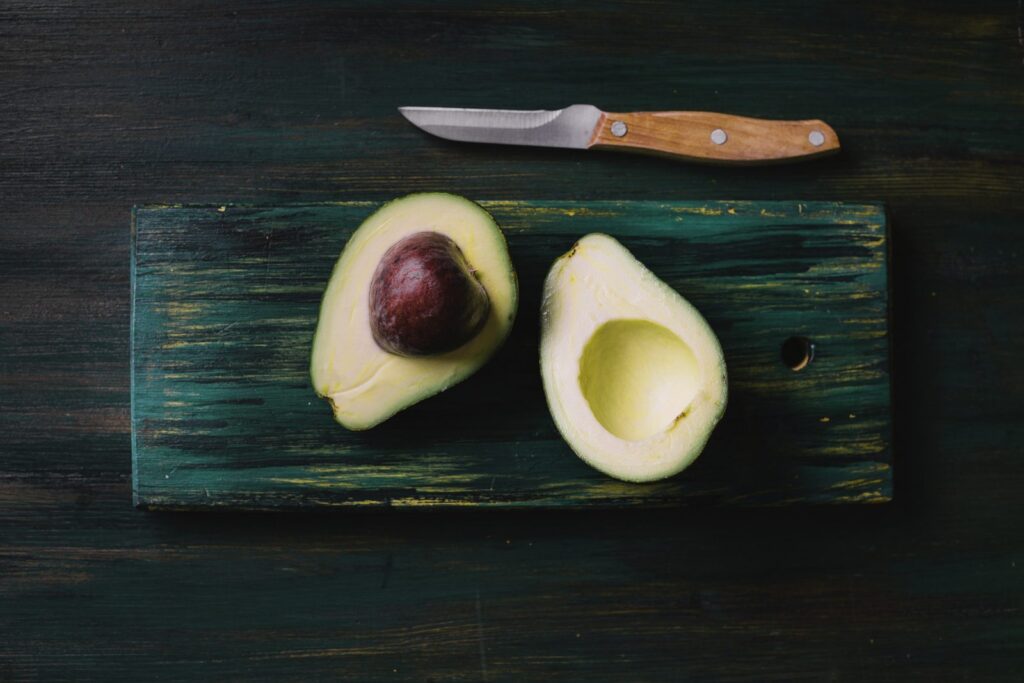
Yes, avocado is a very good choice if you have diabetes: it barely raises blood sugar. According to Ciqual, the flesh contains only traces of carbohydrate and 0.4 g of sugars per 100 g, with 3.6 g of fibre. It is a fatty fruit, not a sweet one: its 20.6 g of fat per 100 g is mostly monounsaturated fat, the same kind found in olive oil. The only limit is calories: half an avocado, about 70 g of flesh, gives 140 kcal. That is the right portion, and an excellent way to go with a starchy food to slow down the absorption of its carbohydrate.
This guide gives general guidance. If you are treated with insulin or with a medicine that can cause hypoglycaemia (low blood sugar), your carbohydrate amount per meal should be set with your doctor or dietitian.
What an avocado contains
| For | Calories | Carbohydrate | Fibre | Fat | of which monounsaturated | Potassium |
|---|---|---|---|---|---|---|
| 100 g of flesh | 203 kcal | traces | 3.6 g | 20.6 g | 12.3 g | 430 mg |
| Half an avocado, 68 g | 138 kcal | traces | 2.4 g | 14.0 g | 8.4 g | 292 mg |
| A whole avocado, 136 g | 276 kcal | traces | 4.9 g | 28.0 g | 16.7 g | 585 mg |
Avocado is therefore the exception among fruits: it does not count as a portion of fruit in carbohydrate terms. According to the Fédération Française des Diabétiques (French Diabetes Federation), a portion of fruit provides 15 to 20 g of carbohydrate; a whole avocado provides almost none. It has no measurable glycaemic index, because there is no carbohydrate to measure.
Why avocado is interesting for blood sugar
- It replaces sweeter or fattier foods: on toast instead of butter or processed cheese, in a salad instead of croutons.
- It slows down the digestion of the meal: fat and fibre slow stomach emptying, and therefore the arrival in the blood of the carbohydrate from the bread or rice that goes with it.
- Its fats are of good quality: 12.3 g of monounsaturated fat for 4.5 g of saturated fat per 100 g. Replacing saturated fat with unsaturated fat is one of the soundest recommendations for the heart, whose risk is increased in diabetes.
- It provides potassium, 430 mg per 100 g, useful for blood pressure, and fibre.
What the studies say
Direct data on avocado and diabetes are still limited. The strongest study followed 6,159 adults of Hispanic origin in the United States for six years, none of whom had diabetes at the start (Wood et al., Journal of Diabetes Mellitus, 2023):
- avocado consumers had a risk of type 2 diabetes 28% lower than non-consumers, after accounting for social factors and lifestyle habits;
- the association was clearest in people with prediabetes, 31% lower;
- but after adjusting for body mass index, it became non-significant, which suggests that part of the link goes through weight.
An observational study does not prove that avocado protects against diabetes. But nothing suggests that it is a problem for blood sugar, quite the opposite.
Randomised trials: what they really show
The observational study cited above does not say whether avocado is what is doing the work. To find out, you need trials in which people are randomly assigned to eat avocado. There are a few, all in people without diabetes:
| Trial | People | What was tested | Result |
|---|---|---|---|
| Wien et al., 2013 | 26 adults with overweight | Half an avocado at lunch, added to or in place of other foods | Added: satisfaction 23% higher and desire to eat 28% lower over 5 hours. In place of other foods: less insulin over 3 hours than the control meal. |
| Khan et al., 2021 | 105 adults with overweight or obesity | One whole avocado a day for 12 weeks, versus a meal with the same calories without avocado | No improvement in insulin sensitivity or in the function of the pancreas cells. In women only, less deep abdominal fat. |
| Zhang et al., 2022 | 93 adults with overweight or obesity, with insulin resistance | Avocado in place of high-carbohydrate foods, for 12 weeks | No significant difference in insulin sensitivity. A trend towards better HbA1c, not significant. An inflammation protein, CRP, was lower. |
The message is consistent: avocado is not a food that lowers blood sugar by itself. Its benefits appear when it replaces other foods, in particular carbohydrate: less insulin after the meal, a plate that keeps you full. Added to a meal that is already complete, it keeps you fuller, but the researchers themselves note that its extra 112 kcal may explain this.
In people who already have diabetes, only observational data are available. An analysis of 14,591 Hispanic adults in the United States (Senn et al., 2023) found that, in people with type 2 diabetes, eating avocado was associated with lower HbA1c and lower fasting blood sugar. No association was seen in people with prediabetes. Again, an association is not proof.
Avocado fats and diabetes: the meta-analysis
What is better established is the effect of the type of fat that avocado contains. A meta-analysis (Qian et al., Diabetes Care, 2016) pooled 24 trials in 1,460 people with type 2 diabetes, comparing a diet rich in monounsaturated fat with a diet rich in carbohydrate. With more monounsaturated fat:
- fasting blood sugar fell by 0.57 mmol/L, about 0.10 g/L;
- triglycerides fell by 0.31 mmol/L;
- weight fell by 1.56 kg;
- systolic blood pressure fell by 2.3 mmHg, and the « good » HDL cholesterol rose slightly.
These trials looked at whole diets, often based on olive oil, not at avocado in particular. But half an avocado provides 8.4 g of this monounsaturated fat: along with olive oil and nuts, it is one of the simplest ways to shift some of your calories from carbohydrate to good fats.
How much avocado a day
There is no official guideline. The limit is calories: a whole avocado gives nearly 280 kcal, as much as a small meal. For a person with diabetes, who is often advised to watch their weight:
- Half an avocado a day, or about 140 kcal, is a reasonable portion.
- In place of another fat: butter, mayonnaise, cheese, cream. Added without removing anything, it makes you put on weight like any energy-dense food.
- A whole avocado is still possible in a meal where it is the main source of fat, for example a large salad.
On the question of weight, see also our avocado page and our guide to healthy snacks.
Avocado and other fatty foods
| Portion | Calories | Carbohydrate | Saturated fat |
|---|---|---|---|
| Half an avocado, 68 g | 138 kcal | traces | 3.1 g |
| Ready-made guacamole, 68 g | 130 kcal | 3.2 g | 2.5 g |
| 30 g of Camembert | 84 kcal | traces | 4.7 g |
| 30 g of Comté | 124 kcal | traces | 6.5 g |
Shop-bought guacamole contains a little carbohydrate, from the tomatoes and onions, and often salt. Homemade guacamole, with avocado, lemon and spices, remains the best choice: see our homemade guacamole recipe. Watch what you eat it with: tortilla chips provide 59 to 63 g of carbohydrate per 100 g according to Ciqual. Vegetable sticks do better. See also cheese and diabetes.
On toast: avocado or another spread?
The most useful thing is to use avocado as your spread, in place of what you usually put on. For a realistic portion on a slice of toast:
| On a slice of toast | Calories | Fat | of which saturated | Fibre |
|---|---|---|---|---|
| 30 g of mashed avocado | 61 kcal | 6.2 g | 1.4 g | 1.1 g |
| 10 g of unsalted butter | 75 kcal | 8.3 g | 6.0 g | 0 g |
| 30 g of cream cheese | 68 kcal | 6.2 g | 3.9 g | 0 g |
| 15 g of mayonnaise | 104 kcal | 11.2 g | 1.0 g | 0 g |
In place of butter, avocado divides the saturated fat by four, for fewer calories. In place of mayonnaise, it saves more than 40 kcal per slice. None of these spreads provides any carbohydrate: it is the bread underneath that counts for blood sugar. See our guide which bread for people with diabetes.
And avocado oil?
Avocado oil is pure fat: 900 kcal per 100 g, of which 65.2 g monounsaturated and 17.9 g saturated according to Ciqual. It is close to extra virgin olive oil, with 73.1 g of monounsaturated and 15.2 g of saturated fat, but it keeps neither the fibre nor the potassium of the fruit. 10 g of oil provides 90 kcal: measure it out like any other oil.
How to include it
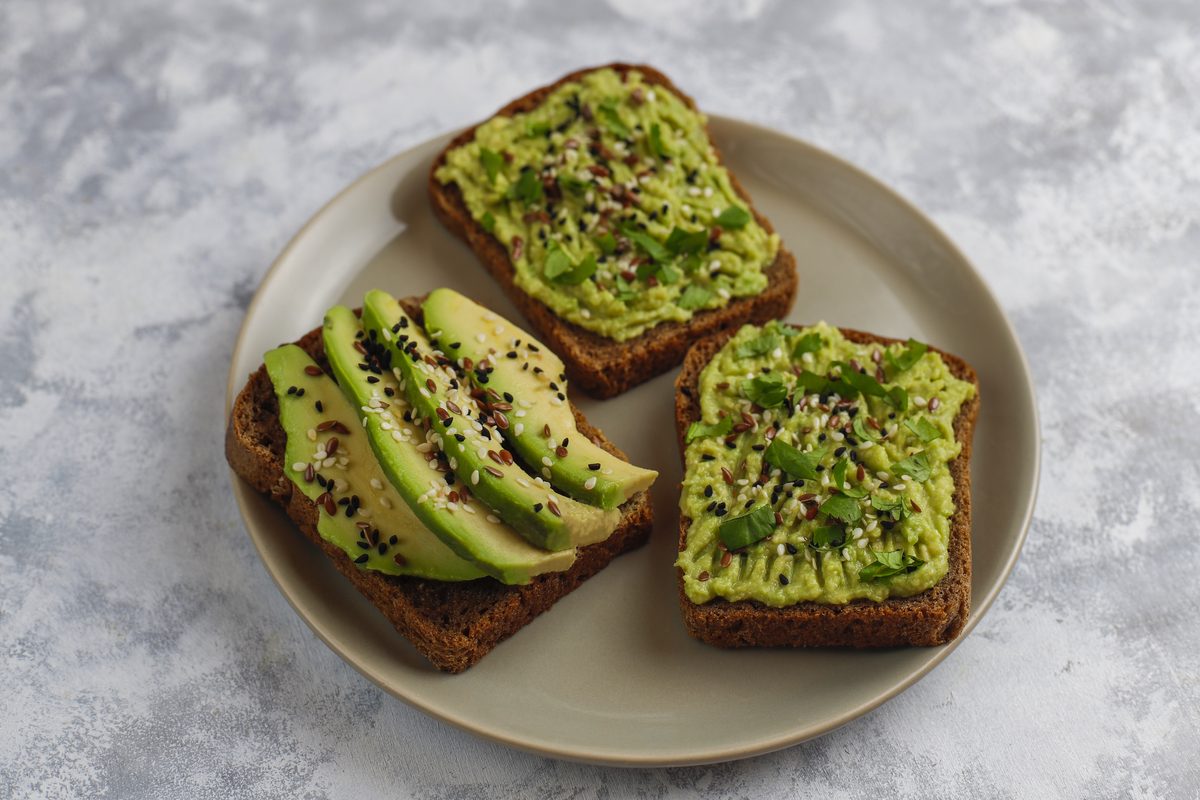
- On a slice of wholemeal toast, with an egg: the bread provides the carbohydrate, and the avocado and egg slow it down. See our avocado toast with egg.
- In a salad, with prawns, chickpeas or quinoa.
- Mashed in place of butter or mayonnaise in a sandwich.
- In a bowl of brown rice and vegetables, to turn a starchy food into a more balanced meal.
Recipes from the site with avocado
In these recipes, avocado goes with a source of protein and vegetables, and the starchy food stays in a measured portion:
- Sardine and avocado toast: the avocado replaces the butter, and the sardine provides omega-3.
- Spinach and avocado omelette: a meal with almost no carbohydrate, to be rounded off with a slice of wholemeal bread if needed.
- Roasted chickpea and avocado salad: the chickpeas are the starchy food, with plenty of fibre.
- Salmon, avocado and edamame poke bowl: keep the rice to a small portion and let the vegetables take its place.
- Avocado, prawn and grapefruit salad: fresh, with a low-sugar fruit.
The avocado chocolate mousse remains a dessert: the avocado replaces the cream, but the chocolate and sugar in the recipe count towards carbohydrate.
Special cases
Kidney failure
Avocado is rich in potassium, 585 mg for a whole avocado. In kidney disease, a possible complication of diabetes, the amount should be decided with your nephrologist.
Anticoagulants
Avocado contains vitamin K, 14.5 µg per 100 g according to Ciqual. For people taking vitamin K antagonists, the key is to keep intake steady from one day to the next, without sudden changes: talk to your doctor.
Latex allergy
Some people who are allergic to latex also react to avocado, banana or kiwi. If you have symptoms, you should seek medical advice.
Gestational diabetes
Avocado is a good ally during pregnancy: little carbohydrate, fibre, good fats. See eating during pregnancy.
Myths about avocado
- « Too fatty for someone with diabetes. » Its fats are mostly monounsaturated, and replacing carbohydrate with this type of fat improves fasting blood sugar in people with type 2 diabetes in the Qian meta-analysis. The real limit is calories, not blood sugar.
- « Green avocado extract lowers blood sugar. » Unripe avocado contains a particular molecule, mannoheptulose, which has been studied for this reason. In a 12-week trial in 60 obese adults without diabetes (Zhao et al., 2023), 10 g a day of freeze-dried green avocado did not change glucose tolerance compared with placebo.
- « An avocado a day protects against diabetes. » In the Khan trial, one whole avocado a day for 12 weeks did not improve insulin sensitivity. Avocado is a good food, not a treatment.
Frequently asked questions
Can someone with diabetes eat avocado?
Yes, with no restriction for blood sugar: avocado contains only traces of carbohydrate. The limit is calories: half an avocado gives about 140 kcal.
Does avocado raise blood sugar?
No, or only negligibly: 0.4 g of sugars per 100 g. It can even slow down the absorption of the meal’s carbohydrate thanks to its fat and fibre.
How much avocado a day for someone with diabetes?
Half an avocado, about 70 g of flesh, is a reasonable portion, in place of another fat.
Does avocado lower blood sugar?
No, no food lowers blood sugar. One study linked eating it to a lower risk of diabetes, but the link went partly through weight.
Does avocado count as a fruit?
Not in carbohydrate terms: it contains almost none. It counts more as a good-quality fat.
Is guacamole suitable for diabetes?
Yes, especially homemade. Shop-bought guacamole contains 4.6 g of carbohydrate per 100 g; it is mostly the chips eaten with it that cause a problem.
Is avocado oil good for someone with diabetes?
Yes, like olive oil: it contains no carbohydrate and its fats are mostly monounsaturated, 65.2 g per 100 g. But it is an oil, 90 kcal per 10 g, and it does not keep the fibre of the fruit.
Should you replace bread with avocado?
Replacing part of the carbohydrate with avocado is what researchers tested in people with insulin resistance: no clear effect on insulin over 12 weeks, but a favourable trend on HbA1c. Keeping a slice of wholemeal bread under the avocado is still a balanced meal.
Does avocado help you snack less?
In a trial in 26 adults with overweight, half an avocado added to lunch reduced the desire to eat by 28% over five hours. The authors note that its extra calories may explain this.
Avocado or butter on toast?
Avocado: 30 g provides 1.4 g of saturated fat, against 6.0 g for 10 g of butter, with fewer calories and a little fibre.
The foods and diabetes series
Glycaemic index, glycaemic load and the right portion, food by food: apple and diabetes, pear and diabetes, orange and diabetes, banana and diabetes, grapes and diabetes, dates and diabetes, melon and diabetes, strawberries and diabetes, pineapple and diabetes, cheese and diabetes, mango and diabetes, honey and diabetes, dark chocolate and diabetes, lentils and diabetes, potatoes and diabetes, oats and diabetes, bread and diabetes, kiwi and diabetes, sweet potato and diabetes, rice and diabetes.
Going further
Cheese and diabetes, lentils and diabetes, type 2 diabetes: diet and prevention, avocado nutrition facts.
Our sources
- Wood AC, Senn MK, Rotter JI. Associations between Avocado Intake and Lower Rates of Incident Type 2 Diabetes in US Adults with Hispanic/Latino Ancestry. Journal of Diabetes Mellitus, 2023.
- Fédération Française des Diabétiques: fruit portion.
- Table Ciqual 2025 (Anses): raw avocado, ready-made guacamole, Camembert, Comté, tortilla chips; USDA FoodData Central, SR Legacy: weight of the flesh of a Hass avocado.
- Wien M, Haddad E, Oda K, Sabaté J. A randomized 3×3 crossover study to evaluate the effect of Hass avocado intake on post-ingestive satiety, glucose and insulin levels, and subsequent energy intake in overweight adults. Nutrition Journal, 2013. PMID 24279738.
- Khan NA et al. Avocado Consumption, Abdominal Adiposity, and Oral Glucose Tolerance Among Persons with Overweight and Obesity. The Journal of Nutrition, 2021. PMID 34191028.
- Zhang X, Xiao D, Guzman G, Edirisinghe I, Burton-Freeman B. Avocado Consumption for 12 Weeks and Cardiometabolic Risk Factors: A Randomized Controlled Trial in Adults with Overweight or Obesity and Insulin Resistance. The Journal of Nutrition, 2022. PMID 35700149.
- Senn MK et al. Associations between avocado intake and measures of glucose and insulin homeostasis in Hispanic individuals with and without type 2 diabetes (HCHS/SOL). Nutrition, Metabolism and Cardiovascular Diseases, 2023. PMID 37798236.
- Qian F, Korat AA, Malik V, Hu FB. Metabolic Effects of Monounsaturated Fatty Acid-Enriched Diets Compared With Carbohydrate or Polyunsaturated Fatty Acid-Enriched Diets in Patients With Type 2 Diabetes: A Systematic Review and Meta-analysis of Randomized Controlled Trials. Diabetes Care, 2016. PMID 27457635.
- Zhao L et al. Effects of an Unripe Avocado Extract on Glycaemic Control in Individuals with Obesity: A Double-Blinded, Parallel, Randomised Clinical Trial. Nutrients, 2023. PMID 38004206.
- Table Ciqual 2025 (Anses): avocado oil, extra virgin olive oil, unsalted butter, cream cheese, mayonnaise.