Oats and diabetes: good, but not miraculous
The short answer
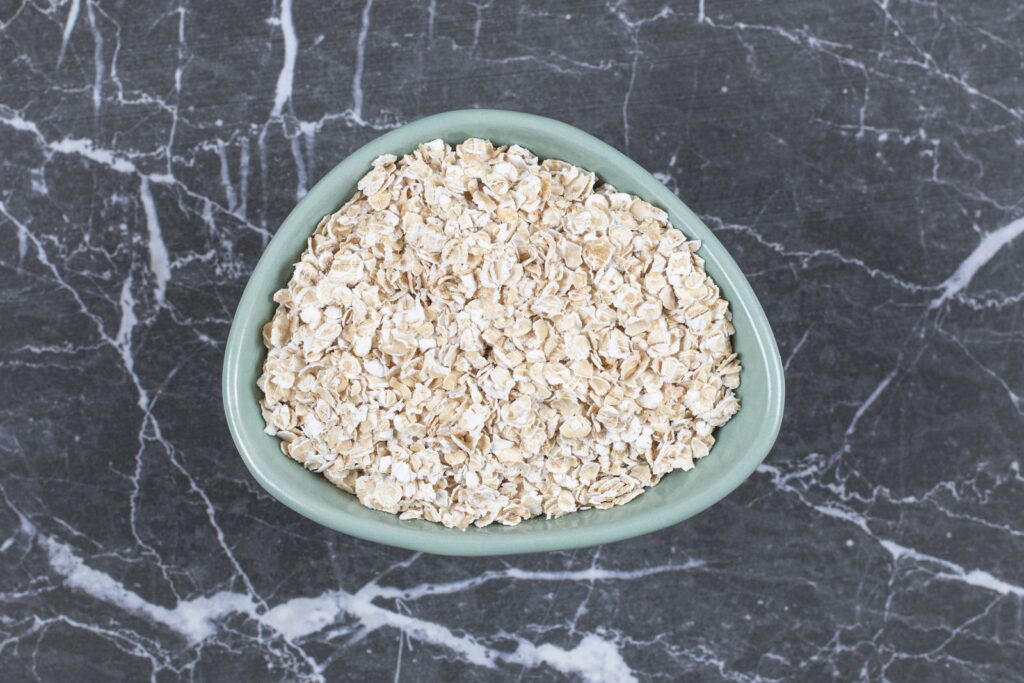
Yes, rolled oats have a place at the breakfast of a person with diabetes, but they are not the miracle food sometimes described. In people with type 2 diabetes, oat porridge has a medium glycaemic index, from 62 to 75 depending on the study, higher than people think. Their real strength lies elsewhere: 11.2 g of fibre per 100 g, including beta-glucans, which slow the absorption of carbohydrate and lower cholesterol. The right portion: 30 to 40 g of oats, which is 17 to 23 g of carbohydrate, with a dairy product or nuts, and no added sugar. Muesli and sugary cereals are a different product.
This guide gives general guidance. If you are treated with insulin or with a medicine that can cause hypos (low blood sugar), your carbohydrate amount per meal should be set with your doctor or dietitian.
What oats contain
| Per | Calories | Carbohydrate | Fibre | Protein | Magnesium |
|---|---|---|---|---|---|
| 30 g of oats | 111 kcal | 17.3 g | 3.4 g | 3.2 g | 30 mg |
| 40 g of oats | 148 kcal | 23.1 g | 4.5 g | 4.2 g | 40 mg |
| 100 g of oats | 369 kcal | 57.7 g | 11.2 g | 10.6 g | 101 mg |
| A bowl of porridge cooked with water, 250 g | 173 kcal | 25.8 g | 4.3 g | 6.4 g | 68 mg |
Oats contain very little sugar, 1 g per 100 g: their carbohydrate is starch. With 11.2 g of fibre per 100 g, they provide almost four times as much as dry pasta, 2.9 g, and 40 g covers 15% of the 30 g of fibre a day recommended by Anses.
Glycaemic index: the surprise
The international glycaemic index tables (Atkinson, Foster-Powell and Brand-Miller, 2008) give contrasting results:
| Product | Participants | Glycaemic index |
|---|---|---|
| Oat porridge, Canada | people with diabetes | 62 |
| Oat porridge, Canada | 6 people with type 2 diabetes | 69 |
| Oat porridge, United States | 8 people with type 2 diabetes | 75 |
| Quick, instant rolled oats | 6 to 7 people with diabetes | 65 and 66 |
| Oat porridge, 4 studies | people without diabetes | 42 to 51 |
| Raw oat bran | 11 to 16 people with diabetes | 50 to 60 |
In people without diabetes, porridge has a low GI, around 50. In people with diabetes, the three available measurements give a medium to high GI. Porridge is a cooked, very hydrated preparation, whose starch is largely gelatinised; it is digested faster than you might imagine. Another lesson: « quick » oats did no worse than regular oats in these studies. For the concept of GI, see our guide to the glycaemic index.
The real strength: beta-glucans
Oats contain beta-glucans, soluble fibres that form a viscous gel in the gut. Two health claims are authorised in the European Union:
- Blood sugar: « oat or barley beta-glucans contribute to the reduction of the blood sugar rise after a meal », provided the food provides at least 4 g of beta-glucans per 30 g of available carbohydrate (EU Regulation No 432/2012).
- Cholesterol: oat beta-glucans reduce blood cholesterol, a risk factor for cardiovascular disease, at 3 g per day (EU Regulation No 1160/2011).
The threshold of 4 g per 30 g of carbohydrate is high: it is reached by fortified products or by oat bran, richer in fibre, 16.7 g per 100 g according to Ciqual, rather than by a bowl of ordinary oats. Ciqual does not give the beta-glucan content: only products that display the claim guarantee the dose. The effect on cholesterol, on the other hand, is a good reason to eat oats regularly with diabetes, since cardiovascular risk is raised.
What studies say in people with diabetes
Beyond the GI of one bowl, what happens when you eat oats regularly? Two reviews give a partial answer.
- Beta-glucan trials. A meta-analysis (Shen et al., Nutrients, 2016) pooled four trials in 350 people with type 2 diabetes who received 2.5 to 3.5 g of oat beta-glucans a day for three to eight weeks. Compared with the control groups, fasting blood sugar fell by 0.52 mmol/L, about 0.09 g/L, and HbA1c by 0.21 points. Fasting insulin did not change. The authors stress the lack of long-term data.
- Population studies. A meta-analysis of eight cohorts, 471,157 participants (Wehrli et al., Nutrients, 2021), found that the biggest oat consumers had a 22% lower risk of type 2 diabetes than the smallest. Simply comparing consumers with non-consumers, the difference, 14% lower, was not significant.
The effect on HbA1c is therefore real but small, about 0.2 points, and it was obtained with precise beta-glucan doses. For perspective, 2.5 to 3.5 g of beta-glucans a day is the same order of magnitude as the « cholesterol » claim, 3 g a day. A bowl of oats fits this logic if eaten daily, without replacing treatment.
When oats are concentrated: bran and fortified products
The international GI tables show that the form of the oats matters a great deal in people with type 2 diabetes:
| Product | Participants | Glycaemic index |
|---|---|---|
| Wheat flakes enriched with extruded oat bran | 16 people with type 2 diabetes | 36 |
| Oat bran flour, Finland | 12 people with type 2 diabetes | 40 |
| Commercial muesli, Canada | 9 people with type 1 and 2 diabetes | 60 |
| Scottish oatcakes | 12 people with type 1 and 2 diabetes | 57 |
| Oat muffin, industrial mix | 9 people with type 1 and 2 diabetes | 69 |
| Oat bran crunch, Finland | 12 people with type 2 diabetes | 79 |
The same Finnish oat bran gives a GI of 40 as flour and 79 as a puffed crunch: industrial processing can wipe out the advantage of oats. Products enriched with oat bran give the best results, which fits the threshold of the European claim, 4 g of beta-glucans per 30 g of carbohydrate.
Work out the glycaemic load of your bowl
| Portion | Carbohydrate | Glycaemic load |
|---|---|---|
| 30 g of oats | 17.3 g | 11 to 13 |
| 40 g of oats | 23.1 g | 14 to 17 |
| 60 g of oats | 34.6 g | 21 to 26 |
A 40 g bowl has a medium load. Beyond 60 g, the load becomes high. Portion size therefore matters as much as with any starchy food.
Oats, muesli, cereals: what changes
| 40 g of | Carbohydrate | of which sugars | Fibre |
|---|---|---|---|
| Rolled oats | 23.1 g | 0.4 g | 4.5 g |
| Oat bran | 20.2 g | 0.9 g | 6.7 g |
| Fruit muesli without added sugars | 23.9 g | 5.3 g | 3.6 g |
| Muesli (average food) | 25.4 g | 7.8 g | 2.8 g |
| Chocolate crunchy muesli | 25.9 g | 8.6 g | 2.7 g |
| Breakfast cereals (average food) | 29.3 g | 8.5 g | 2.4 g |
Plain rolled oats have almost 20 times less sugar than an average muesli. Crunchy mueslis and breakfast cereals add sugar, and sometimes fat. If you like muesli, choose one without added sugars, or make your own with oats, nuts and a little fresh fruit.
Drink, biscuits, oatcakes: the other oat products
| 100 g of | Carbohydrate | of which sugars | Fibre |
|---|---|---|---|
| Rolled oats cooked in water | 10.3 g | 0.2 g | 1.7 g |
| Plain oat drink, no added sugars | 7.8 g | 5.0 g | less than 0.5 g |
| Dry oat biscuit or oatcake | 63.9 g | 34.6 g | 3.4 g |
| Chocolate-coated oat biscuit | 61.3 g | 39.6 g | 3.6 g |
- Oat drink « with no added sugars » still contains 5 g of sugars per 100 g, and almost no fibre. A 25 cL glass provides 19.5 g of carbohydrate, including 12.5 g of sugars, as much as a piece of fruit. With less than 0.5 g of fibre per 100 g according to Ciqual, it has lost most of the grain’s fibre, beta-glucans included: it does not have the strengths of rolled oats.
- Oat biscuits are biscuits: more than a third of their weight is sugar. The word « oat » on the packet changes nothing for blood sugar.
- Porridge cooked with water is very diluted, 10.3 g of carbohydrate per 100 g: it is the weight of dry oats that counts, not the volume of the bowl.
Equivalents: 20 g of carbohydrate at breakfast
To vary breakfast without changing the amount of carbohydrate, here is what provides about 20 g of carbohydrate:
| Food | Weight for 20 g of carbohydrate | Fibre provided |
|---|---|---|
| Rolled oats | 35 g | 3.9 g |
| Oat bran | 40 g | 6.6 g |
| Flaked muesli without added sugars | 33 g | 3.0 g |
| Crunchy fruit muesli | 32 g | 2.3 g |
| Wholemeal bread, T150 flour | 49 g | 3.5 g |
| White bread | 34 g | 0.9 g |
For the same carbohydrate, rolled oats and oat bran provide four to seven times more fibre than white bread. Crunchy muesli provides the same carbohydrate in less weight, but a good part of it is sugars: 22.4 g per 100 g according to Ciqual.
How to make a good bowl
- 30 to 40 g of oats, weighed once so you can judge it by eye.
- Milk, an unsweetened plant-based drink or yoghurt for protein.
- Nuts or seeds: almonds, walnuts, chia or flax seeds, which add fat and fibre and slow digestion. See how many seeds a day.
- A low-sugar fruit, strawberries, raspberries, grated apple, rather than very ripe banana, honey or syrup. See strawberries and diabetes.
- Cinnamon for a sweet taste without sugar.
Compared with slices of white bread and jam, a bowl made this way provides more fibre, more protein and far less sugar.
Special cases
Coeliac disease
Oats do not contain gluten in the strict sense, but they are often contaminated by wheat. With coeliac disease, more often associated with type 1 diabetes, choose oats guaranteed gluten-free and ask your doctor for advice. See gluten-free.
Cholesterol
This is where oats are most useful: their beta-glucans reduce cholesterol, at 3 g per day. A daily bowl contributes to this.
Gestational diabetes
A small bowl of oats, 30 g, with a dairy product, can be part of breakfast during pregnancy, within the framework set by your care team. Breakfast is often the meal when blood sugar rises the most: portion size matters particularly there. See eating during pregnancy.
3 recipes to eat them
- Apple and cinnamon overnight oats: prepared the night before, with yoghurt.
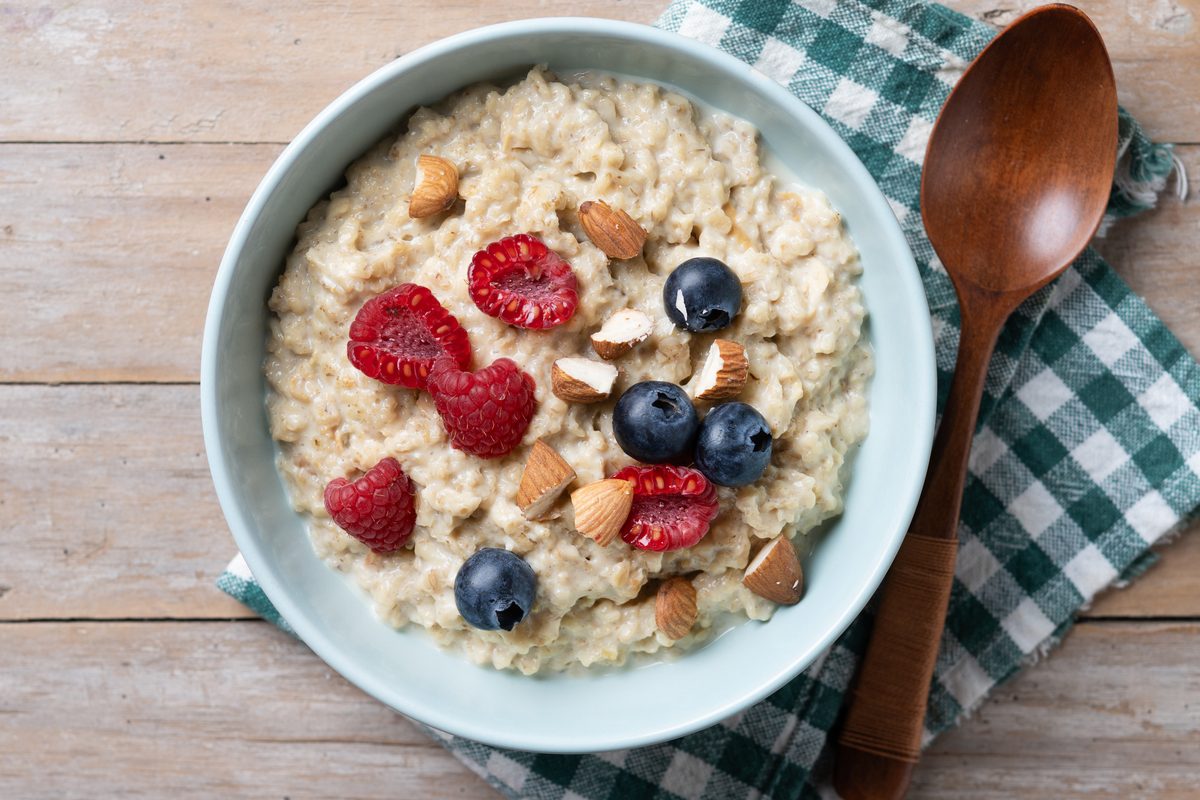
- Porridge: to top with red berries rather than banana to limit carbohydrate.
- Vanilla chia pudding: an even higher-fibre alternative, to combine with a few oats.
More ideas in our low glycaemic index recipes.
More oat recipes
- Oat porridge with red berries: red berries sweeten without weighing it down.
- Protein overnight oats: more protein for a breakfast that sticks with you.
- Oat and vegetable patties: oats in a savoury version, for lunch or dinner.
Recipes based on banana, such as the oat and banana bars with no added sugar, are still sweet from the fruit: count the banana in your carbohydrate. See bananas and diabetes.
Frequently asked questions
Can people with diabetes eat oats?
Yes, 30 to 40 g at breakfast, with a dairy product and no added sugar. They are carbohydrate, 23 g for 40 g, to be counted as a starchy food.
Do oats have a low GI?
In people without diabetes, yes, about 50. In people with type 2 diabetes, porridge was measured between 62 and 75, a medium GI.
How much oats for someone with diabetes?
30 to 40 g, which is 17 to 23 g of carbohydrate. Beyond 60 g, the glycaemic load becomes high.
Do oats lower blood sugar?
No, but their beta-glucans can reduce the blood sugar rise after a meal when the dose is sufficient, 4 g per 30 g of carbohydrate, and they lower cholesterol.
Oats or muesli?
Plain oats: 0.4 g of sugars per 40 g, against 7.8 g for an average muesli. Choose a muesli without added sugars if you prefer muesli.
Is oat bran better?
It is richer in fibre, 16.7 g per 100 g against 11.2 g, and a little lower in carbohydrate. You can replace part of the oats with bran.
Is oat drink suitable for people with diabetes?
With caution: even with no added sugars, it contains 5 g of sugars per 100 g, which is 12.5 g per 25 cL glass, and almost no fibre. Count it like a fruit, not like milk.
Do oats lower HbA1c?
A little, in trials: 2.5 to 3.5 g of oat beta-glucans a day reduced HbA1c by 0.21 points and fasting blood sugar by 0.52 mmol/L in people with type 2 diabetes. It is a complement to lifestyle and treatment, not a substitute.
Are oat biscuits healthier?
Not for blood sugar: 34.6 g of sugars per 100 g according to Ciqual. They are biscuits like any other.
Can you eat oats in the evening?
Yes, in a savoury version for example, as patties with vegetables, in place of another starchy food. 35 g of oats provide about 20 g of carbohydrate.
The foods and diabetes series
Glycaemic index, glycaemic load and the right portion, food by food: apples and diabetes, pears and diabetes, oranges and diabetes, bananas and diabetes, grapes and diabetes, dates and diabetes, melon and diabetes, strawberries and diabetes, pineapple and diabetes, cheese and diabetes, mango and diabetes, honey and diabetes, dark chocolate and diabetes, lentils and diabetes, potatoes and diabetes, avocado and diabetes, bread and diabetes, kiwi and diabetes, sweet potatoes and diabetes, rice and diabetes.
Further reading
Dietary fibre, lentils and diabetes, strawberries and diabetes, type 2 diabetes: diet and prevention, nutrition facts for oats.
Our sources
- Atkinson FS, Foster-Powell K, Brand-Miller JC. International Tables of Glycemic Index and Glycemic Load Values: 2008. Diabetes Care, 2008.
- Regulation (EU) No 432/2012: claim on oat and barley beta-glucans and blood sugar after a meal; Regulation (EU) No 1160/2011: oat beta-glucans and cholesterol.
- Table Ciqual 2025 (Anses): raw and cooked rolled oats, oat bran, mueslis, breakfast cereals. Anses: 30 g of fibre per day.
- Shen XL, Zhao T, Zhou Y et al. Effect of Oat β-Glucan Intake on Glycaemic Control and Insulin Sensitivity of Diabetic Patients: A Meta-Analysis of Randomized Controlled Trials. Nutrients, 2016. PMID 26771637.
- Wehrli F et al. Oat Intake and Risk of Type 2 Diabetes, Cardiovascular Disease and All-Cause Mortality: A Systematic Review and Meta-Analysis. Nutrients, 2021. PMID 34444718.
- Table Ciqual 2025 (Anses): oat drink, oat biscuits, flaked and crunchy mueslis, wholemeal bread and white bread.