Melon and Diabetes: High GI, the Right Slice in Grams
The short answer
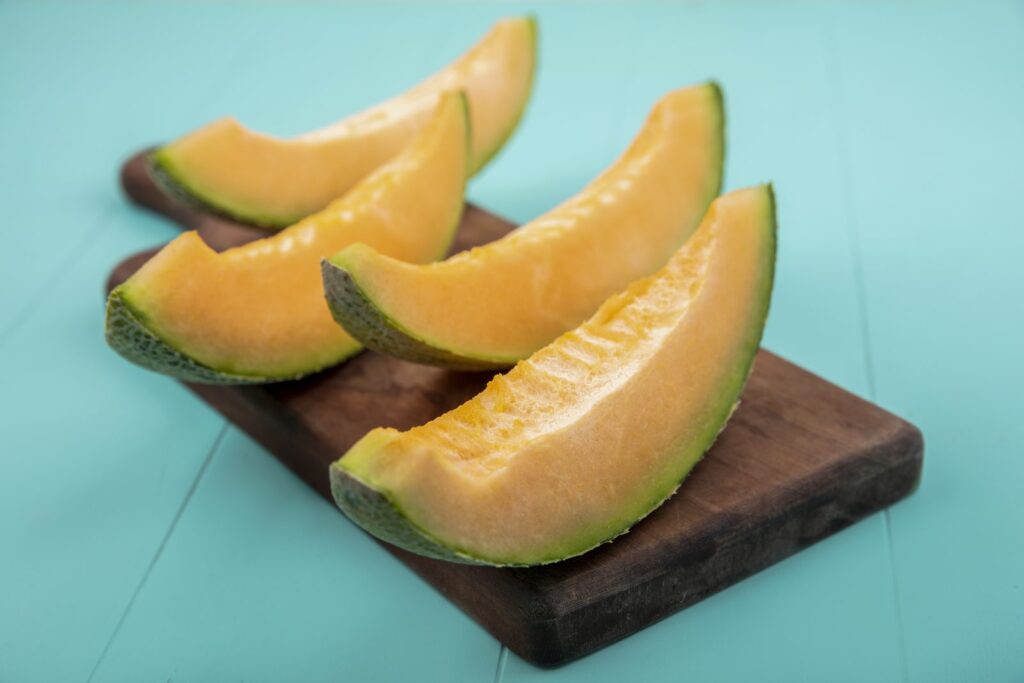
Yes, a person with diabetes can eat melon, but as a slice, not half a melon. Its glycaemic index (GI) is high, 65 to 70 according to the two available measurements, both made in people without diabetes. The Charentais melon sold in France is also fairly sweet: 14.8 g of carbohydrate per 100 g according to Ciqual. The right portion is a slice of about 120 g of flesh, which is one fruit portion of 15 to 20 g of carbohydrate, ideally at the start of a full meal or with a dairy product. Watermelon contains half as much carbohydrate, but its GI is even higher.
This guide gives general guidelines. If you are treated with insulin or with a medicine that can cause hypoglycaemia (low blood sugar), your carbohydrate amount per meal should be set with your doctor or dietitian.
What melon contains
| For | Calories | Carbohydrate | of which sugars | Fibre | Potassium |
|---|---|---|---|---|---|
| 100 g of Charentais melon | 60 kcal | 14.8 g | 10.6 g | 1.3 g | 380 mg |
| A 120 g slice | 72 kcal | 17.8 g | 12.7 g | 1.6 g | 456 mg |
| A large 200 g wedge | 120 kcal | 29.6 g | 21.2 g | 2.6 g | 760 mg |
| 300 g of flesh | 179 kcal | 44.4 g | 31.8 g | 3.9 g | 1,140 mg |
The weight of a “slice” varies enormously from one melon to another. The simplest approach is to weigh your portion once: a fruit portion, 15 to 20 g of carbohydrate according to the French Diabetes Federation (Fédération Française des Diabétiques), is 100 to 135 g of Charentais melon flesh. Half a melon often contains far more: it is the classic summer trap.
Charentais melon also has its strengths: 380 mg of potassium and 2,500 µg of beta-carotene per 100 g, the precursor of vitamin A.
Glycaemic index and glycaemic load of melon
The international glycaemic index tables (Atkinson, Foster-Powell and Brand-Miller, 2008) contain no measurement of melon in people with diabetes. The two available measurements come from Australia, in people without diabetes:
| Fruit | Glycaemic index | People |
|---|---|---|
| Cantaloupe melon, raw | 65 | 8 without diabetes |
| Cantaloupe melon, raw | 70 | 10 without diabetes |
| Watermelon, raw | 72 | 8 without diabetes |
| Watermelon, raw | 80 | 8 without diabetes |
With a GI of 65 to 70, melon is one of the fruits with the highest index, far from the apple (36) or the pear (38) measured in people with diabetes. There are two reasons: it contains little fibre, 1.3 g per 100 g, and its sugars are mostly sucrose, 6.6 g per 100 g, half of which is converted into glucose. It is a fruit full of water, which is eaten quickly and digested quickly.
But the GI does not tell the whole story: it has to be related to the quantity. That is what glycaemic load is for.
Work out the glycaemic load of your portion
| Portion of Charentais melon | Carbohydrate | Glycaemic load |
|---|---|---|
| 80 g | 11.8 g | 8 |
| 120 g, one slice | 17.8 g | 12 |
| 200 g | 29.6 g | 19 to 21 |
| 300 g | 44.4 g | 29 to 31 |
A 120 g slice has a medium load, comparable to a medium banana. From 200 g, the load becomes high. The melons measured in Australia contained less sugar than the Charentais in Ciqual: the load of your melon depends a lot on its variety and ripeness. A very fragrant, very ripe melon is also the sweetest.
Half, quarter or eighth of a melon: the carbohydrate in numbers
In a restaurant or at home, melon is rarely served in grams. Here is what the usual cuts represent, using the flesh weights measured by the USDA for cantaloupe melons and the carbohydrate content of Charentais melon from Ciqual.
| Cut | Flesh | Carbohydrate | Fruit portions |
|---|---|---|---|
| One eighth of a medium melon | 69 g | 10 g | half a portion |
| A quarter of a small melon | 110 g | 16 g | one portion |
| A quarter of a medium melon | 138 g | 20 g | one portion, at most |
| Ten melon balls | 138 g | 20 g | one portion, at most |
| Half a small melon | 221 g | 33 g | almost two portions |
| Half a medium melon | 276 g | 41 g | more than two portions |
| A whole small melon | 441 g | 65 g | more than three portions |
The simplest guideline: a quarter of a melon, not a half. Half a melon, served as a starter in summer, provides 33 to 41 g of carbohydrate on its own, as much as 200 g of boiled potatoes, before the rest of the meal. If half a melon is how it is cut at home, share it between two.
And watermelon?
| For | Calories | Carbohydrate | Fibre | Glycaemic load |
|---|---|---|---|---|
| 100 g of watermelon | 35 kcal | 8.3 g | 0.5 g | 6 to 7 |
| A 200 g wedge | 71 kcal | 16.7 g | 1.0 g | 12 to 13 |
| A large 286 g slice | 101 kcal | 23.8 g | 1.4 g | 17 to 19 |
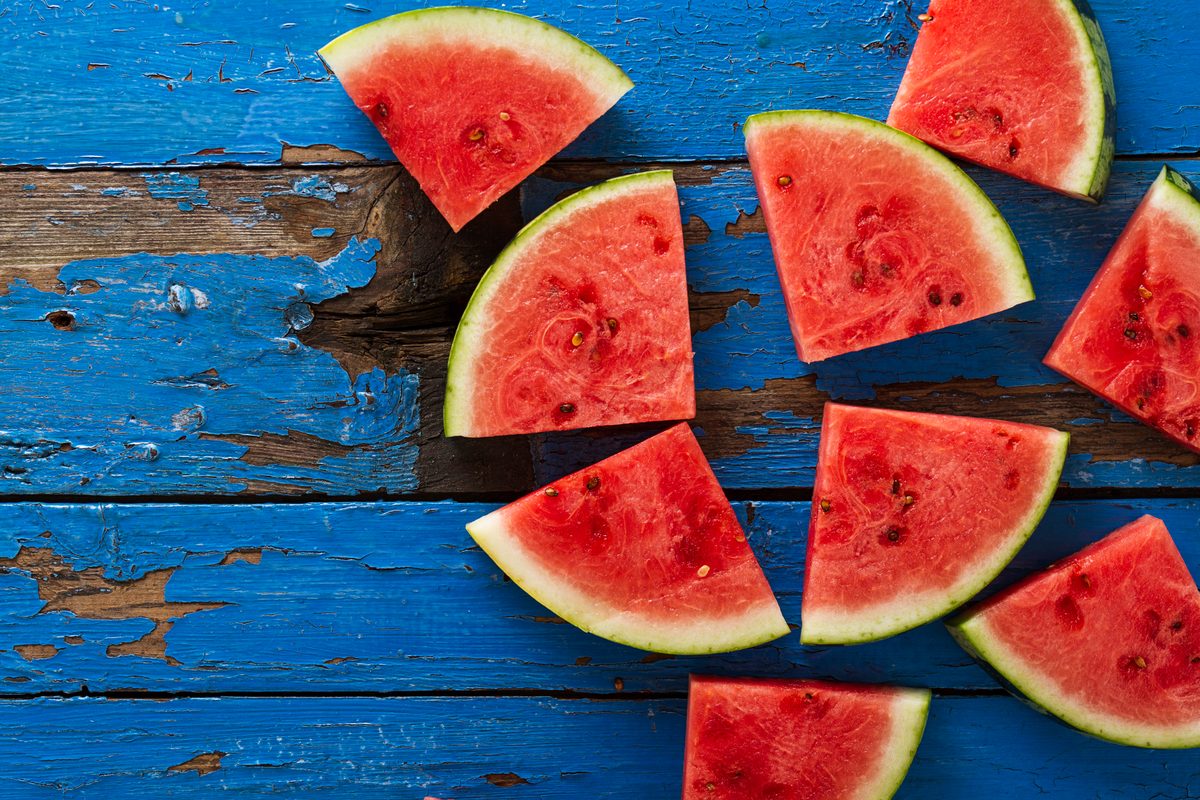
Watermelon is the perfect example of a misleading GI: its index is high, but it contains so little carbohydrate, 8.3 g per 100 g, that a 200 g wedge still has a medium load. A fruit portion is about 200 g of watermelon, almost twice as much as melon. The French Diabetes Federation (Fédération Française des Diabétiques) advises pairing it with yoghurt to reduce its impact on blood glucose.
Good habits
- Weigh your slice once to see what 120 g of melon or 200 g of watermelon looks like.
- Eat it at the start of a full meal, followed by protein and vegetables, rather than on its own as an afternoon snack.
- Pair it with a dairy product: a few cubes of melon in fromage frais or plain yoghurt, as the French Diabetes Federation (Fédération Française des Diabétiques) advises for watermelon.
- Count it as a fruit: a melon as a starter and a fruit for dessert is two fruits.
- Avoid melon with port: the fortified wine adds sugar and alcohol.
Melon and cured ham
The classic pairing has one advantage: the ham provides protein and a little fat, which slow down the digestion of the melon’s sugar. Its drawback is salt, something to watch if you have high blood pressure, which is common with diabetes. One or two thin slices are enough.
Melon as a starter or a dessert: the order of foods matters
In France, melon is often eaten as a starter. Yet several trials show that the order in which you eat the foods of one meal changes the blood glucose that follows.
- A trial in 11 people with type 2 diabetes treated with metformin (Shukla et al., Diabetes Care, 2015). They ate the same meal twice: bread and orange juice, chicken, salad and broccoli. When the vegetables and chicken were eaten first, and the bread and juice 15 minutes later, blood glucose was 29% lower at 30 minutes and 37% lower at 60 minutes, and the two-hour area under the curve was 73% lower. Insulin was also lower.
- A Japanese trial with a glucose sensor (Imai et al., Diabetic Medicine, 2013), in 19 people with type 2 diabetes and 21 people without diabetes. Eating the vegetables for five minutes, then the main dish, then the rice or bread ten minutes later, reduced blood glucose peaks and swings compared with the reverse order. Average blood glucose over the day did not change.
- Over 16 weeks, in 45 adults with prediabetes (Shukla et al., Nutrients, 2023), learning to keep carbohydrate for the end of the meal was judged easy to follow by 72% of participants in the group, but did no better than standard dietary advice on HbA1c or weight.
None of these trials tested melon itself. But in a meal, melon plays the role of the carbohydrate: served on its own as a starter, it is what arrives first in an empty stomach. Three ways to take this into account:
- Keep it for dessert, after the vegetables and the protein, if your blood glucose rises a lot after melon as a starter.
- As a starter, do not serve it alone: with a slice of cured ham, some feta or fromage frais, you eat the protein at the same time as the fruit.
- Test yourself once if you have a blood glucose meter: compare the reading two hours after a meal with melon as a starter and a meal with melon for dessert. Your own response is what counts.
What the long-term studies say
In the study by Muraki et al. (BMJ, 2013), which followed more than 187,000 people for up to 24 years, cantaloupe melon is the only whole fruit associated with a slightly higher risk of type 2 diabetes, by 10% for every three portions a week. By comparison, grapes were associated with a 12% lower risk and apples and pears with a 7% lower risk. An observational study does not prove causation, but it points the same way as melon’s high GI: it is a fruit to keep for small portions, not a fruit to eat freely.
Should fruit in general be limited, then? No: a Danish randomised trial (Christensen et al., 2013) in 63 people newly diagnosed with type 2 diabetes found no difference in HbA1c between the group that ate at least two fruits a day and the group that ate at most two.
Melon or another fruit
| 100 g of | Carbohydrate | Glycaemic index | Glycaemic load |
|---|---|---|---|
| Banana | 19.7 g | 48 (diabetes) | 9.5 |
| Charentais melon | 14.8 g | 65 to 70* | 10 |
| Apple | 11.9 g | 36 (diabetes) | 4.3 |
| Pear | 11.4 g | 38 (diabetes) | 4.3 |
| Watermelon | 8.3 g | 72 to 80* | 6 to 7 |
| Orange | 8.0 g | 45 (diabetes) | 3.6 |
Weight for weight, Charentais melon has a higher glycaemic load than banana and more than double that of apple or pear. In summer, the easiest fruits remain strawberries, peaches and apricots, and citrus fruit the rest of the year. See our guides on apples and diabetes, pears and diabetes and oranges and diabetes, and our ranking of the least sugary fruits.
Special cases
Gestational diabetes
Melon is not forbidden during pregnancy, but its high GI makes it a fruit to keep for small portions, as a starter or with a dairy product. For food safety, wash the melon before cutting it and keep cut portions in the fridge. See eating during pregnancy.
High blood pressure and kidneys
Melon is rich in potassium, 456 mg per 120 g slice, which is rather favourable for blood pressure. With kidney failure, however, potassium may need to be limited: the amount is decided with your nephrologist.
Prediabetes
Melon has its place in a small portion. What matters most is not to make it a whole meal or a snack eaten freely. See type 2 diabetes: diet and prevention.
3 ideas for eating it
- A slice of melon and a thin slice of cured ham, at the start of a meal with vegetables and protein.
- A melon, cucumber, feta and mint salad: the cucumber adds volume without carbohydrate, the feta provides protein.
- A few cubes of watermelon in plain yoghurt, as the French Diabetes Federation (Fédération Française des Diabétiques) advises.
More ideas in our low glycaemic index recipes.
Frequently asked questions
Can someone with diabetes eat melon?
Yes, in a portion: a slice of 100 to 135 g of Charentais melon is one fruit portion of 15 to 20 g of carbohydrate. Half a melon often goes well beyond this amount.
What is the glycaemic index of melon?
65 to 70 according to the two available measurements, made in Australia in people without diabetes. That is a medium to high GI, one of the highest among fruits.
Melon or watermelon for someone with diabetes?
Watermelon contains almost half as much carbohydrate, 8.3 g against 14.8 g per 100 g. Its GI is higher, but for the same portion its glycaemic load is lower.
How much melon a day when you have diabetes?
One slice of about 120 g, counted as one of the day’s fruits.
Does melon raise blood glucose?
More than most fruits, because it contains little fibre and is digested quickly. At the start of a full meal or with a dairy product, the effect is more gradual.
Is melon good for you despite its GI?
Yes: it provides potassium and plenty of beta-carotene, 2,500 µg per 100 g. It is the portion that matters, not a ban.
Is half a melon too much for someone with diabetes?
Most of the time, yes: half a medium melon provides about 41 g of carbohydrate, more than two fruit portions. A quarter of a small melon, about 16 g, is one portion.
Is it better to eat melon before or after the meal?
Trials on food order show lower blood glucose when carbohydrate arrives after vegetables and protein. Melon was not tested in them, but as a dessert, or as a starter with ham or feta, it follows this logic.
How many melon balls make a portion?
Ten balls weigh about 138 g according to the USDA, which is 20 g of carbohydrate from Charentais melon: that is the top end of a fruit portion.
The foods and diabetes series
Glycaemic index, glycaemic load and the right portion, food by food: apples and diabetes, pears and diabetes, oranges and diabetes, bananas and diabetes, grapes and diabetes, dates and diabetes, strawberries and diabetes, pineapple and diabetes, cheese and diabetes, mango and diabetes, honey and diabetes, dark chocolate and diabetes, lentils and diabetes, potatoes and diabetes, avocado and diabetes, porridge oats and diabetes, bread and diabetes, kiwi and diabetes, sweet potatoes and diabetes, rice and diabetes.
Further reading
Apples and diabetes, pears and diabetes, bananas and diabetes, glycaemic index, melon nutrition facts.
Our sources
- Atkinson FS, Foster-Powell K, Brand-Miller JC. International Tables of Glycemic Index and Glycemic Load Values: 2008. Diabetes Care, 2008.
- Muraki I et al. Fruit consumption and risk of type 2 diabetes: results from three prospective longitudinal cohort studies. BMJ, 2013.
- Christensen AS et al. Effect of fruit restriction on glycemic control in patients with type 2 diabetes, a randomized trial. Nutrition Journal, 2013.
- Fédération Française des Diabétiques (French Diabetes Federation), “Which fruit to choose in summer?” (in French): fruit portion, slice of melon, watermelon and yoghurt.
- Ciqual 2025 table (Anses): Charentais melon, watermelon; USDA FoodData Central, SR Legacy: weight of a slice of watermelon.
- Shukla AP, Iliescu RG, Thomas CE, Aronne LJ. Food Order Has a Significant Impact on Postprandial Glucose and Insulin Levels. Diabetes Care, 2015. PMID 26106234.
- Imai S, Fukui M, Ozasa N et al. Eating vegetables before carbohydrates improves postprandial glucose excursions. Diabetic Medicine, 2013. PMID 23167256.
- Shukla AP, Karan A, Hootman KC et al. A Randomized Controlled Pilot Study of the Food Order Behavioral Intervention in Prediabetes. Nutrients, 2023. PMID 37892527.
- USDA FoodData Central, SR Legacy: flesh weight of cantaloupe melon (small, medium, eighth, balls).