Lentils and diabetes: the very low GI starchy food, in numbers
The short answer
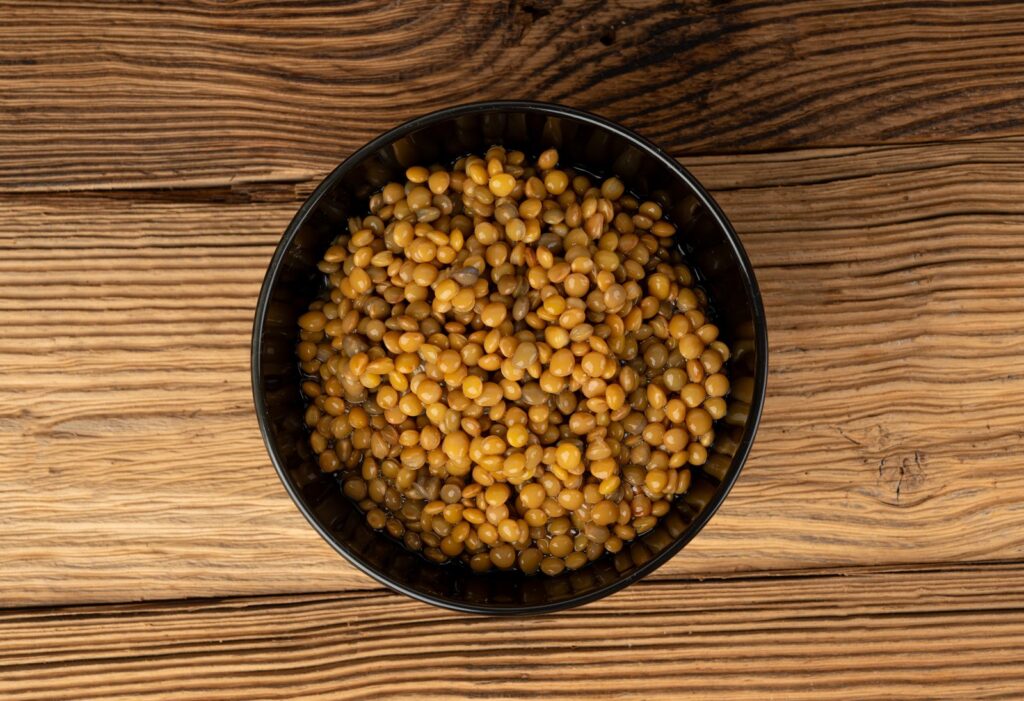
Lentils are one of the best starchy foods if you have diabetes. Their glycaemic index measured in people with type 2 diabetes is very low, 21 to 30 for dried lentils boiled, and they provide carbohydrate, protein and plenty of fibre all at once. A 200 g portion cooked contains 32 g of carbohydrate, half as much as the same amount of white rice, and 17 g of fibre. A randomised trial in 121 people with diabetes showed that increasing pulses lowered HbA1c more than a diet rich in whole wheat. Just be careful with tinned lentils, which have a higher GI and are saltier.
This guide gives general guidance. If you are treated with insulin or with a medicine that can cause hypoglycaemia (low blood sugar), your carbohydrate amount per meal should be set with your doctor or dietitian.
What a portion of lentils contains
| For | Calories | Carbohydrate | Protein | Fibre | Iron |
|---|---|---|---|---|---|
| 100 g of cooked lentils | 125 kcal | 16.2 g | 10.1 g | 8.5 g | 2.5 mg |
| A side portion, 150 g cooked | 188 kcal | 24.3 g | 15.2 g | 12.7 g | 3.7 mg |
| A main dish, 200 g cooked | 250 kcal | 32.4 g | 20.2 g | 16.9 g | 4.9 mg |
The GEMRCN, the reference for catering in canteens and institutions, provides for 200 to 250 g of cooked dried pulses per adult as a main dish. Without scales: according to Ciqual, green lentils absorb water and weigh about 2.6 times more once cooked, so 80 g of dried lentils give about 200 g cooked.
A 200 g portion covers more than half of the 30 g of fibre a day recommended by Anses (the French food safety agency), and provides 20 g of protein. It is this double contribution, slow carbohydrate and protein, that makes lentils such a useful food when you have diabetes.
Glycaemic index: measurements in people with diabetes
The international glycaemic index tables (Atkinson, Foster-Powell and Brand-Miller, 2008) include many measurements of lentils in people with diabetes, for a 150 g portion:
| Lentils | Study | Glycaemic index | Glycaemic load (150 g) |
|---|---|---|---|
| Red, dried, boiled | Canada, 14 people with type 2 diabetes | 21 | 4 |
| Green, dried, boiled | Canada, 11 people with type 2 diabetes | 22 | 4 |
| Unspecified | United States, 8 people with type 2 diabetes | 28 | 5 |
| Green, dried, boiled | France, 3 people with type 2 diabetes | 30 | 5 |
| Red, dried, boiled | Canada, 7 people with type 2 diabetes | 31 | 6 |
| Tinned | Canada, 9 people with type 1 and 2 diabetes | 44 | 9 |
| Green, tinned in brine | Canada, 11 people with type 2 diabetes | 52 | 9 |
Two lessons. First, lentils cooked from dried have a GI among the lowest of all carbohydrate-rich foods, between 21 and 31. Second, tinned lentils have a clearly higher GI, 44 to 52: prolonged sterilisation softens the grains and probably makes their starch easier to digest. They are still low GI, but the difference is real. For the notion of GI, see our guide to the glycaemic index.
Lentils or another starchy food: the comparison
| 200 g cooked of | Calories | Carbohydrate | Protein | Fibre |
|---|---|---|---|---|
| Lentils | 250 kcal | 32.4 g | 20.2 g | 16.9 g |
| Chickpeas | 296 kcal | 35.4 g | 16.6 g | 16.4 g |
| Kidney beans | 232 kcal | 24.6 g | 19.3 g | 23.2 g |
| Brown rice | 374 kcal | 75.2 g | 7.7 g | 4.2 g |
| Pasta | 334 kcal | 62.8 g | 12.2 g | 4.4 g |
| White rice | 310 kcal | 66.4 g | 6.3 g | 2.8 g |
For an equal portion on the plate, lentils provide half as much carbohydrate as rice or pasta, three times more protein than white rice and six times more fibre. Kidney beans do even better on fibre. Replacing part of your starchy foods with pulses is one of the most effective levers for blood sugar. See also our guides how much rice per person and how much pasta per person.
What the studies say
The most direct trial is that of Jenkins et al. (Archives of Internal Medicine, 2012). 121 people with type 2 diabetes were assigned for three months to one of two diets: one increasing pulses by at least one cup a day (lentils, chickpeas, beans), the other increasing wholewheat products. Results:
- HbA1c fell by 0.5 points with pulses, against 0.3 points with whole wheat;
- systolic blood pressure fell by 4.5 mmHg more with pulses;
- the calculated coronary risk decreased more.
A drop of 0.5 points in HbA1c through diet alone, in three months, is a clinically noticeable effect. It is consistent with the very low GI of lentils and their richness in fibre. The PNNS (the French national nutrition and health programme) also recommends eating pulses at least twice a week, for the whole population.
The summary of 41 trials
The Jenkins trial is not isolated. A meta-analysis (Sievenpiper et al., Diabetologia, 2009) pooled 41 randomised trials on pulses, lentils, chickpeas, beans and peas, in people with and without diabetes:
- eaten on their own, pulses lowered fasting blood sugar and insulin;
- included in a low GI diet, in 19 trials, they lowered the markers of long-term blood sugar, HbA1c or fructosamine;
- included in a high-fibre diet, in 11 trials, they lowered both fasting blood sugar and these long-term markers.
Results varied a lot from one trial to another, depending on the type of pulse, the dose, the form and the duration, and the authors call for larger trials. But the direction is consistent: more pulses, better blood sugar.
Replacing half the rice with lentils: two trials
Two trials measured precisely what a partial swap changes, at equal carbohydrate, in healthy adults:
- Moravek et al., 2018 (two groups of 24 adults): when half the carbohydrate in a white rice meal came from lentils, the relative glycaemic response fell by about 20%. With instant mashed potato, the drop reached 35%. The three lentils tested, large green, small green and red, all had an effect.
- Chamoun et al., 2024: when 25 g of carbohydrate was replaced with lentils in recipes, the relative glycaemic response fell to 48 to 58% of that of the original dish for a rice chilli, 49 to 61% for a potato soup, and 84 to 88% for a wheat muffin. Red lentils did a little better than green.
Translated onto the plate with Ciqual: instead of 150 g of cooked white rice, about 50 g of carbohydrate, take 75 g of rice and 155 g of cooked lentils. The carbohydrate stays the same, but you gain about 12 g of fibre, 13 g of protein, and a blood sugar that rises much less. This is exactly what traditional rice and lentil dishes do, such as kitchari or mujadara.
How to include them day to day
- As a main dish: 200 g of cooked lentils with vegetables, with no other starchy food. With a cereal, keep 100 g of lentils and 100 g of brown rice, for example: the combination gives complete protein.
- As a partial replacement for meat: a half-meat, half-lentil bolognese, a chilli with lentils and kidney beans.
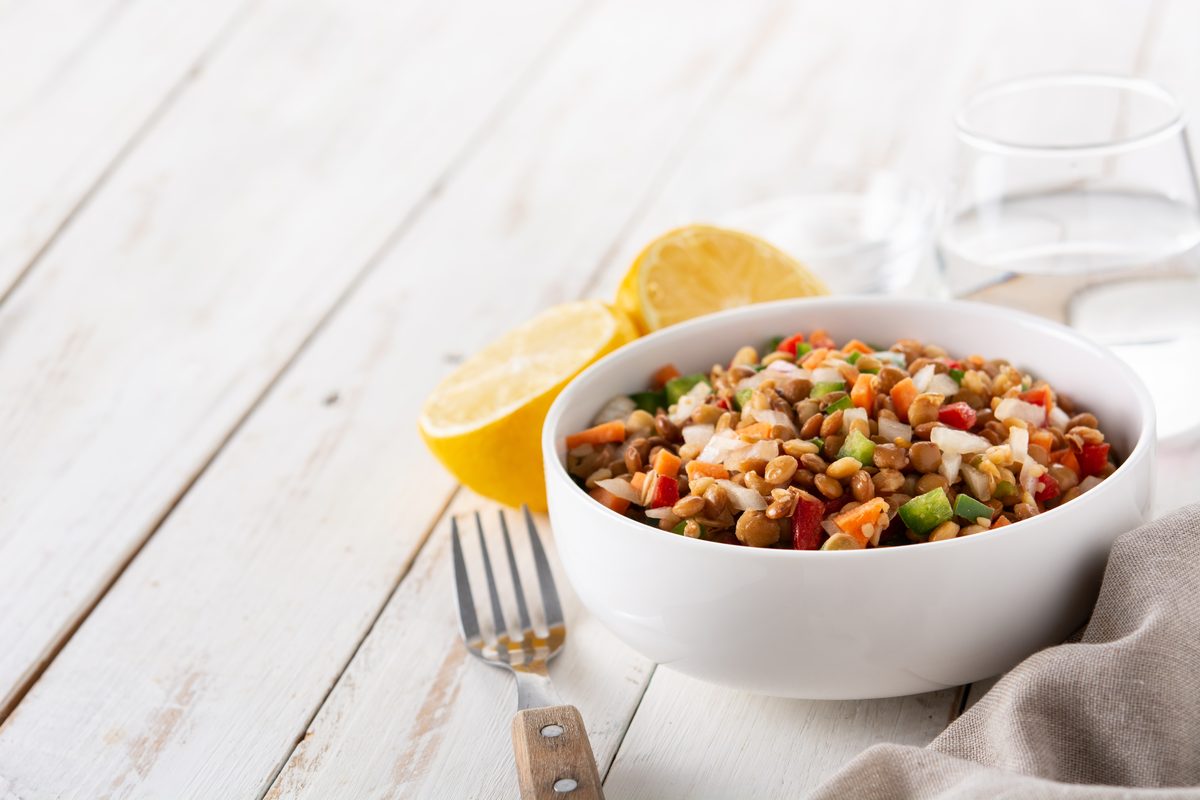
- In a cold salad, with raw vegetables, an egg or feta: a complete, low GI meal.
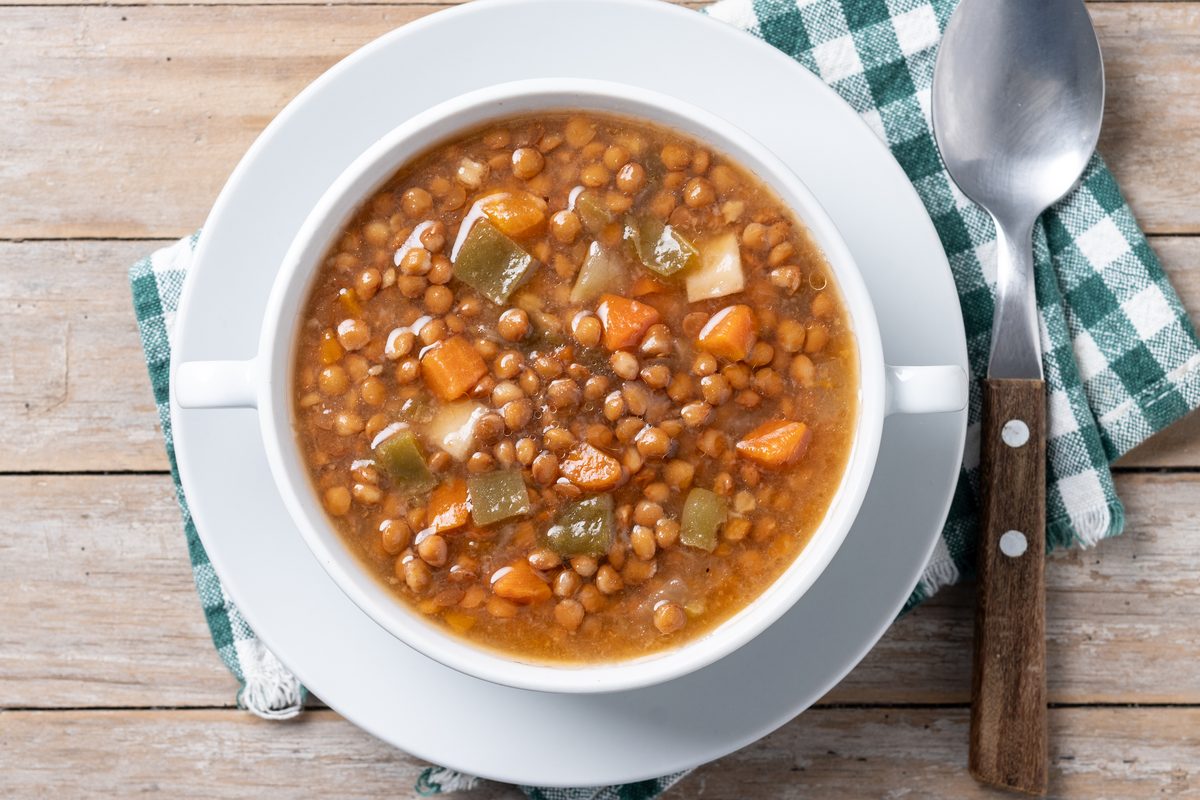
- In soup, red lentils cook in 15 minutes and thicken without any added starchy food.
For details on combinations, see our guide to plant proteins.
Dried or tinned?
Dried lentils have the lowest GI and contain no salt. Ready-cooked tinned lentils have a higher GI, half the fibre, 4 g against 8.5 g per 100 g, and 0.65 g of salt per 100 g. If you use tins, choose them plain and rinse them. Red lentils, which cook quickly, are a good compromise for saving time without tins.
Green, red, blond, as pasta: the forms compared
| 100 g cooked of | Carbohydrate | Fibre | Protein |
|---|---|---|---|
| Green lentils | 16.2 g | 8.5 g | 10.1 g |
| Red lentils | 15.0 g | 8.2 g | 10.6 g |
| Blond lentils | 16.3 g | 6.0 g | 9.7 g |
| Split peas | 16.3 g | 8.0 g | 8.6 g |
| Lentil sprouts, raw | 19.0 g | 3.1 g | 9.0 g |
| Red lentil pasta | 25.1 g | 4.9 g | 11.7 g |
| Standard wheat pasta, for comparison | 31.4 g | 2.2 g | 6.1 g |
- Green and red are equivalent: same carbohydrate, same fibre, and a very low GI in people with diabetes for both. Blond lentils have a little less fibre.
- Split peas are a close cousin, with as much fibre: a homemade split pea soup plays the same role.
- Red lentil pasta is a real step up from wheat pasta: for 150 g cooked, 37.7 g of carbohydrate against 47.1 g, twice the fibre and nearly twice the protein. It is still higher in carbohydrate than whole lentils, 25.1 g against 16.2 g per 100 g, and its GI is not measured in the tables. Count it as a starchy food, not as lentils.
Ready meals with lentils
According to Ciqual, a shop-bought lentil soup contains 7.6 g of carbohydrate and only 1.6 g of fibre per 100 g, with 0.52 g of salt; a petit salé with lentils (salt pork with lentils), 8.9 g of carbohydrate and 0.98 g of salt. These dishes are very diluted in lentils and saltier: a homemade soup, like our carrot and red lentil velouté, provides more fibre per bowl.
More lentil recipes from the site
- Red lentil dahl with spinach and red lentil curry with coconut milk: with a small portion of rice, 75 g cooked, to stay in the spirit of the replacement trials.
- Kitchari and mujadara: rice and lentils cooked together.
- Lentil, feta and tomato salad: to prepare in advance for lunch.
- Lentil balls in tomato sauce: an alternative to meatballs.
Special cases
Bloating
Lentils contain fermentable fibres, the galacto-oligosaccharides, which can cause wind. Start with small portions, increase gradually, and soak and then rinse dried lentils. If you have irritable bowel syndrome, see our guide to the FODMAP diet.
Kidney failure
Lentils are rich in potassium and phosphorus. In kidney disease, a possible complication of diabetes, the amount should be decided with your nephrologist.
Gestational diabetes
Lentils are an excellent starchy food during pregnancy: low GI, iron, fibre. Combine them with a source of vitamin C, raw vegetables or citrus fruit, to absorb their iron better. See eating during pregnancy.
Insulin treatment
Lentils still contain 32 g of carbohydrate per 200 g: count them in the meal’s carbohydrate, even though their effect is more gradual.
3 recipes for eating them
- Lentil salad with chicken: a complete, cold, low GI meal.
- Lentil and vegetable soup: filling, with no added starchy food.
- Lentil bolognese: the lentils replace part of the meat.
More ideas in our low glycaemic index recipes.
Frequently asked questions
Can someone with diabetes eat lentils?
Yes, and it is even recommended: their GI in people with diabetes is 21 to 30, and they provide fibre and protein. A randomised trial showed a drop in HbA1c with more pulses.
How many lentils for someone with diabetes?
200 to 250 g cooked as a main dish, or about 80 to 100 g dried, or 100 to 150 g cooked if they go with another source of carbohydrate.
Do lentils raise blood sugar?
Only a little: 200 g cooked provides 32 g of carbohydrate with a GI of 21 to 30, a glycaemic load of about 7 to 10, which is low.
Green or red lentils?
Both have a very low GI in people with diabetes, 21 to 31. Red cook faster and suit soups; green keep their shape in salads.
Are tinned lentils suitable?
Yes, but their GI is higher, 44 to 52, they have less fibre and more salt. Rinse them and choose dried lentils when you can.
Lentils or rice for someone with diabetes?
Lentils: for 200 g cooked, 32 g of carbohydrate against 66 g for white rice, and six times more fibre.
Is lentil pasta suitable for diabetes?
Better than wheat pasta: 25.1 g of carbohydrate per 100 g cooked against 31.4 g, with twice the fibre. But it is still higher in carbohydrate than whole lentils, and its GI has not been measured.
Should you replace all the rice with lentils?
Not necessarily: replacing half the carbohydrate in rice with lentils already reduced the glycaemic response by about 20% in one trial. 75 g of rice and 155 g of cooked lentils provide the same carbohydrate as 150 g of rice alone.
Are shop-bought lentil soups a good choice?
They are very diluted: 7.6 g of carbohydrate but only 1.6 g of fibre per 100 g, and 0.52 g of salt. A homemade soup, richer in lentils, does better.
Red or green lentils for blood sugar?
They are equivalent in composition, and both have a very low GI in people with diabetes. In a 2024 trial, recipes with red lentils reduced blood sugar a little more than those with green.
The foods and diabetes series
Glycaemic index, glycaemic load and the right portion, food by food: apple and diabetes, pear and diabetes, orange and diabetes, banana and diabetes, grapes and diabetes, dates and diabetes, melon and diabetes, strawberries and diabetes, pineapple and diabetes, cheese and diabetes, mango and diabetes, honey and diabetes, dark chocolate and diabetes, potatoes and diabetes, avocado and diabetes, oats and diabetes, bread and diabetes, kiwi and diabetes, sweet potato and diabetes, rice and diabetes.
Going further
Plant proteins, dietary fibre, type 2 diabetes: diet and prevention, glycaemic index, lentil nutrition facts.
Our sources
- Atkinson FS, Foster-Powell K, Brand-Miller JC. International Tables of Glycemic Index and Glycemic Load Values: 2008. Diabetes Care, 2008.
- Jenkins DJ et al. Effect of legumes as part of a low glycemic index diet on glycemic control and cardiovascular risk factors in type 2 diabetes mellitus: a randomized controlled trial. Archives of Internal Medicine, 2012.
- GEMRCN: portion weights, cooked dried pulses; PNNS (Santé publique France): pulses at least twice a week.
- Table Ciqual 2025 (Anses): dried lentils, boiled and tinned, chickpeas, kidney beans, cooked rice and pasta. Anses: 30 g of fibre a day.
- Sievenpiper JL, Kendall CW, Esfahani A et al. Effect of non-oil-seed pulses on glycaemic control: a systematic review and meta-analysis of randomised controlled experimental trials in people with and without diabetes. Diabetologia, 2009. PMID 19526214.
- Moravek D, Duncan AM, VanderSluis LB et al. Carbohydrate Replacement of Rice or Potato with Lentils Reduces the Postprandial Glycemic Response in Healthy Adults in an Acute, Randomized, Crossover Trial. The Journal of Nutrition, 2018. PMID 29659967.
- Chamoun D, Duncan AM, Lukus PK et al. Postprandial Blood Glucose and Insulin Response in Healthy Adults When Lentils Replace High-Glycemic Index Food Ingredients in Muffins, Chilies and Soups. Nutrients, 2024. PMID 39203806.
- Table Ciqual 2025 (Anses): red and blond lentils, split peas, lentil sprouts, red lentil pasta, wheat pasta, prepacked lentil soup and petit salé with lentils.