Sweet potato and diabetes: no better than potato
The short answer
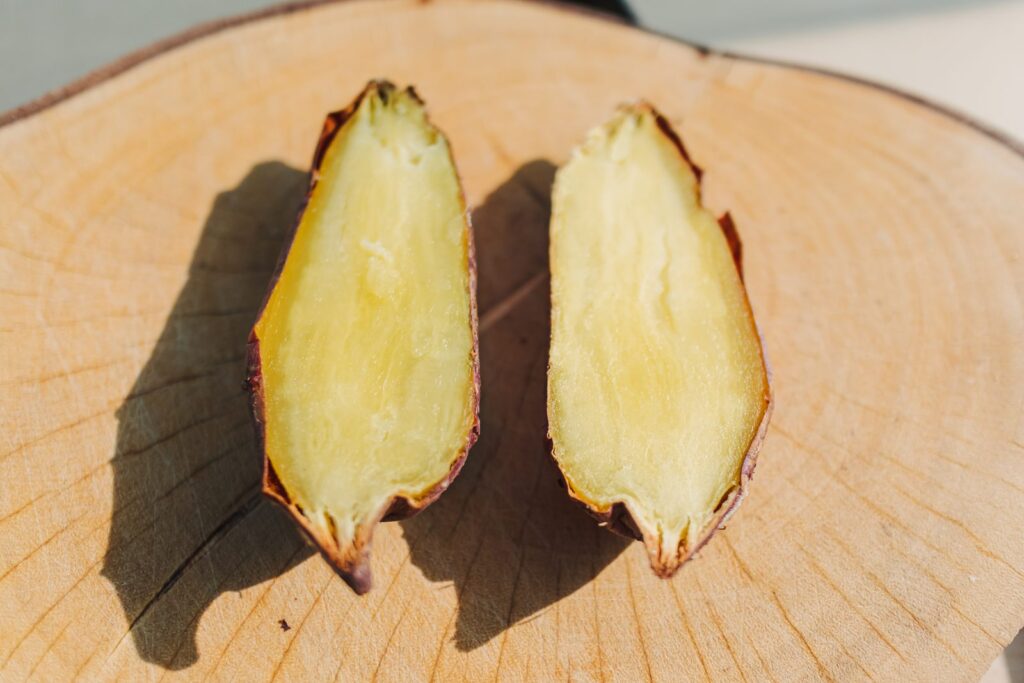
Sweet potato is no better than potato for blood glucose: it is a starchy food like any other. It contains as much carbohydrate, 16.3 g per 100 g cooked against 16.8 g for boiled potato, and its glycaemic index varies enormously with cooking: from 44 to 61 boiled, to 82 roasted and 94 baked. In people with diabetes, the two available measurements give 59 and 78. Its real strength lies elsewhere: it is very rich in beta-carotene, with 100 g covering more than the day’s vitamin A. The right way to eat it: 150 to 200 g boiled or steamed, in place of another starchy food.
This guide gives general guidelines. If you are treated with insulin or with a medicine that can cause hypoglycaemia, your carbohydrate amount per meal is set with your doctor or dietitian.
Sweet potato or potato: the comparison
| 100 g cooked | Calories | Carbohydrate | of which sugars | Fibre | Vitamin A | Potassium |
|---|---|---|---|---|---|---|
| Sweet potato | 79 kcal | 16.3 g | 6.1 g | 2.9 g | 873 µg | 353 mg |
| Boiled potato | 81 kcal | 16.8 g | 0.9 g | 1.8 g | less than 1 µg | 363 mg |
The two tubers have the same calories and the same carbohydrate. Sweet potato contains more sugars, 6.1 g per 100 g, which explains its taste, slightly more fibre, and above all 10,500 µg of beta-carotene, or 873 µg of vitamin A equivalent, 109% of the reference value per 100 g. For blood glucose, however, it does no better.
Glycaemic index: cooking makes all the difference
The international glycaemic index tables (Atkinson, Foster-Powell and Brand-Miller, 2008) list a dozen measurements for sweet potato:
| Preparation | People | Glycaemic index |
|---|---|---|
| Boiled, Australia and Jamaica | people without diabetes | 44 to 61 |
| Unspecified, Canada | 5 people without diabetes | 48 |
| Boiled 15 minutes, Canada | 13 people with type 1 and 2 diabetes | 59 |
| White-fleshed sweet potato, boiled | 9 people without diabetes | 75 |
| Fried in oil, Jamaica | 10 people without diabetes | 76 |
| Kumara, New Zealand | 14 people with type 2 diabetes | 78 |
| Charcoal-roasted, Jamaica | 10 people without diabetes | 82 |
| Baked 45 minutes, Jamaica | 10 people without diabetes | 94 |
| Average of 9 studies | people without diabetes | 70 |
The gap between boiled and baked sweet potato is spectacular: in the same Jamaican study, 46 boiled against 94 baked. Baking, long and dry, gelatinises the starch and converts part of it into sugars. Yet this is precisely the most popular way of cooking it, as oven chips or roasted. For the notion of GI, see our guide to the glycaemic index.
Raw or cooked: what cooking changes in sweet potato
The Ciqual table lets us see, with figures, what heat does to the starch in sweet potato. It also gives samples taken in the French Antilles, which show how much the variety matters.
| 100 g of sweet potato | Carbohydrate | of which starch | of which sugars | Fibre |
|---|---|---|---|---|
| Raw | 17.1 g | 12.7 g | 4.2 g | 3.0 g |
| Cooked | 16.3 g | 6.1 g | 6.1 g | 2.9 g |
| Steamed flesh, Martinique | 25.2 g | 21.7 g | not measured | 9.2 g |
| Mash cooked with cream | 12.1 g | not measured | 7.5 g | 4.5 g |
Three things to remember:
- Cooking halves the starch and increases the sugars by half. Raw, sweet potato contains 12.7 g of starch for 4.2 g of sugars. Cooked, it is fifty-fifty. The total carbohydrate hardly changes. This is why it tastes sweet once cooked, and it is consistent with the rise in GI as cooking time lengthens.
- Not all sweet potatoes have the same carbohydrate content. The steamed Martinique sample contains 25.2 g per 100 g, more than 50% more than the « average » Ciqual sweet potato, with also much more fibre.
- Mash with cream contains less carbohydrate per 100 g, 12.1 g, because it is diluted by the cream and liquid. But its carbohydrate is mostly sugars, 7.5 g, and people often eat more of it.
With the same cooking, flesh colour matters too. In the same Australian study, with 8 minutes of boiling, orange-fleshed sweet potato had a GI of 61 and purple-skinned, white-fleshed sweet potato a GI of 75 (Atkinson 2008). These are two measurements in people without diabetes: they give a trend, not a rule.
Work out the glycaemic load of your portion
| Sweet potato portion | Carbohydrate | Glycaemic index | Glycaemic load |
|---|---|---|---|
| 150 g boiled | 24.5 g | 59 | 14 |
| 200 g boiled | 32.6 g | 59 | 19 |
| 200 g baked | 32.6 g | 94 | 31 |
| 200 g boiled potatoes, for comparison | 33.6 g | 53 | 18 |
With the same cooking, boiled sweet potato and boiled potato have an almost identical load. Baked, sweet potato reaches a high load. See our guide to potatoes and diabetes.
Sweet potato, yam, cassava, taro: the tubers compared
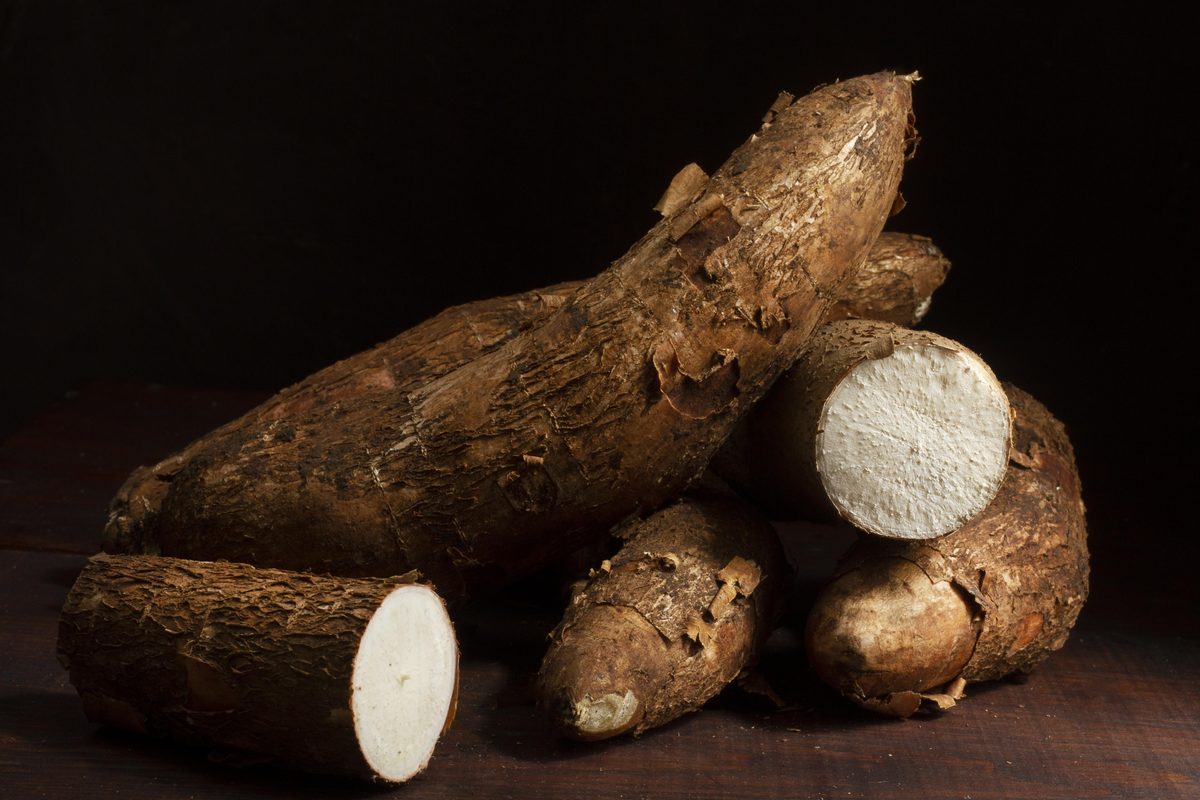
In Caribbean, African or Asian kitchens, sweet potato sits alongside other roots and tubers. For blood glucose, they are not at all equal:
| 100 g cooked | Carbohydrate | Fibre | Glycaemic index | Glycaemic load (150 g) |
|---|---|---|---|---|
| Sweet potato | 16.3 g | 2.9 g | 62 on average (3 studies in people with diabetes) | 15 |
| Yam, boiled | 23.6 g | 3.9 g | 25 (13 people with type 2 diabetes, New Zealand) to 65 (9 people with type 2 diabetes, Ghana) | 9 to 23 |
| Plantain | 28.9 g | 2.3 g | 41 (boiled green plantain, 9 people with type 2 diabetes, Ghana) | 18 |
| Taro | 29.5 g | 5.1 g | 54 to 56 (people without diabetes) | 24 to 25 |
| Cassava | 32.8 g | 0.4 g | 46 (boiled, salted, 14 people with type 2 diabetes, Kenya); 94 (8 people without diabetes) | 23 |
Sweet potato is in fact the lowest in carbohydrate of these tubers: yam contains 45% more, cassava twice as much. For an equal portion, 150 g of cassava provide 49 g of carbohydrate, against 24.5 g for sweet potato. If you cook these roots, it is the portion that must adapt: about 100 g of yam or 75 g of cassava for the same amount of carbohydrate as 150 g of sweet potato.
The GI gaps are also very large from one study to another, for the same tuber: yam ranges from 25 to 65 in people with diabetes, depending on the variety and the country. Cassava was measured at 46 in Kenyans with diabetes, but at 94 in people without diabetes in another study. These figures do not let us classify these foods as « good » or « bad »: they are a reminder that variety and preparation matter as much as the name of the food.
Good habits
- Boiled or steamed, in chunks, rather than baked, roasted or as chips.
- 150 to 200 g, in place of rice, pasta or potatoes, not on top of them. The GEMRCN provides for 200 to 250 g of cooked starchy foods per adult as a side.
- With the skin, well washed, for the fibre.
- With green vegetables, a protein and a drizzle of oil: the vitamin A in sweet potato is better absorbed with a little fat.
- Mashed, with no added sugar: beware of recipes that add honey or maple syrup to « caramelise ».
Sweet potato: starchy food or vegetable?
It is often filed among the vegetables, because of its colour and taste. For blood glucose, it is a starchy food: 16 g of carbohydrate per 100 g, several times more than most green vegetables. A plate of roasted sweet potato « as a side to vegetables » can thus contain as much carbohydrate as a plate of pasta. For vegetables that really do contain little, see our guide to high-fibre vegetables.
Special cases
Kidney failure
Like potato, sweet potato is rich in potassium, 353 mg per 100 g. In kidney disease, the amount is decided with the nephrologist.
Gestational diabetes
During pregnancy, prefer it boiled or steamed, in a moderate portion. Its vitamin A comes from beta-carotene, which does not cause an excess problem unlike the vitamin A in liver. See eating during pregnancy.
Sport
For an athlete, sweet potato is a good recovery starch, rich in carbohydrate and potassium. See what to eat before and after exercise.
Same amount of carbohydrate: the equivalents
To swap one starchy food for another without changing the carbohydrate in the meal, here are the weights that each provide about 25 g of carbohydrate:
| Cooked food | Weight for 25 g of carbohydrate |
|---|---|
| Sweet potato | 153 g |
| Lentils | 154 g |
| Boiled potato | 149 g |
| Boiled yam | 106 g |
| Plantain | 87 g |
| Pasta | 80 g |
| White rice | 75 g |
| White bread | 43 g |
Sweet potato is one of the most « voluminous » starchy foods: for the same carbohydrate, the plate holds twice as much as with rice. This is an advantage for anyone with a big appetite. The key is not to stack them: a sweet potato and bread at the same meal is two portions of starchy food.
Building a plate with sweet potato
The idea: sweet potato replaces the starchy food, vegetables provide the volume, a protein and a little fat complete the meal. A few recipes on the site that follow this logic:
- Chicken, sweet potato and green beans: the standard plate, starchy food, green vegetable and protein.
- Lentil, sweet potato and spinach curry and sweet potato and lentil cottage pie: two starchy foods sharing the portion.
- Sweet potato and roasted chickpea Buddha bowl: a complete bowl, with raw vegetables.
- Sweet potato gratin: baked, so keep to a moderate portion, with a salad.
When sweet potato is combined with lentils or chickpeas, reduce it accordingly: 100 g of sweet potato and 100 g of cooked lentils provide 32.5 g of carbohydrate, as much as 200 g of sweet potato alone, but with more fibre and protein. See also lentils and diabetes.
3 ideas to eat it
- Sweet potato mash: with no added sugar, in a 150 g portion, with fish.
- Steamed sweet potato cubes in a lentil salad: two starchy foods to share, 100 g of each.
- A sweet potato and carrot soup, spiced with ginger, with a dairy product.
Oven-baked sweet potato chips remain an occasional dish: this is the cooking method that raises the GI the most.
What the Cochrane review says
You sometimes read that sweet potato « cures » diabetes. This reputation comes from trials on sweet potato preparations, not on the food. The Cochrane Collaboration, which assesses the evidence in medicine, took stock in 2013 (Ooi and Loke):
- only three randomised trials, with 140 participants with type 2 diabetes in total, lasting six weeks to five months;
- all three were run by the same investigator, with a risk of bias judged unclear or high;
- all compared a sweet potato preparation dosed at 4 g a day with a placebo;
- HbA1c fell by 0.3 points more than with placebo, at three to five months, in two trials involving 122 people;
- no serious adverse effects were reported, but diabetes complications, mortality and quality of life were not studied.
The authors’ conclusion is clear: the evidence is insufficient to recommend sweet potato in type 2 diabetes. And 4 g a day of a preparation has nothing to do with a 150 g portion: these results say nothing about sweet potato eaten as a starchy food, which remains a source of carbohydrate to count.
Common misconceptions about sweet potato
- « It has a low GI. » Not on average: in people with diabetes, the three available measurements give an average GI of 62, medium, and baked or roasted preparations rise above 80 in people without diabetes.
- « It is sweeter, so worse than potato. » It contains more sugars, 6.1 g against 0.9 g per 100 g, but not more carbohydrate overall. It is the total amount of carbohydrate and the cooking that matter for blood glucose.
- « Sweet potato cubes count as a vegetable. » No: 150 g provide 24.5 g of carbohydrate, as much as an 80 g portion of pasta.
Frequently asked questions
Can a person with diabetes eat sweet potato?
Yes, as a starchy food: 150 to 200 g boiled or steamed, in place of another starchy food. Its GI measured in people with diabetes is 59 boiled.
Is sweet potato better than potato for someone with diabetes?
Not for blood glucose: same amount of carbohydrate, and a comparable GI with the same cooking. It does provide much more vitamin A and slightly more fibre.
What is the glycaemic index of sweet potato?
From 44 to 61 boiled, 76 fried, 82 roasted and 94 baked, according to the international tables. In people with diabetes: 59 and 78.
Is baked sweet potato not recommended?
It is the cooking method that raises blood glucose the most, with a GI of 94. Keep it for special occasions, in a small portion.
Does sweet potato count as a vegetable?
No, as a starchy food: 16.3 g of carbohydrate per 100 g cooked.
How much sweet potato for someone with diabetes?
150 to 200 g cooked, or 25 to 33 g of carbohydrate, if it is the only starchy food in the meal.
Can you eat sweet potato cold, in a salad?
Yes. No GI measurement for cooled sweet potato exists in the international tables. For potato, a Canadian study (Fernandes et al., 2005) concluded that cooking it in advance and eating it cold or reheated helps limit the GI; this is a reasonable lead, not proven data for sweet potato.
Yam or sweet potato for someone with diabetes?
Weight for weight, yam contains 45% more carbohydrate, 23.6 g per 100 g cooked against 16.3 g. Its GI varies from 25 to 65 in people with diabetes depending on the variety. If you choose yam, take about 100 g instead of 150 g of sweet potato.
Do sweet potato supplements lower blood glucose?
A Cochrane review found a 0.3-point fall in HbA1c with a preparation dosed at 4 g a day, but in only two trials by the same investigator. The evidence is judged insufficient; talk to your doctor before taking any supplement.
What weight of sweet potato replaces a portion of rice?
About 150 g of cooked sweet potato provide the same 25 g of carbohydrate as 75 g of cooked white rice.
The foods and diabetes series
Glycaemic index, glycaemic load and the right portion, food by food: apples and diabetes, pears and diabetes, oranges and diabetes, bananas and diabetes, grapes and diabetes, dates and diabetes, melon and diabetes, strawberries and diabetes, pineapple and diabetes, cheese and diabetes, mango and diabetes, honey and diabetes, dark chocolate and diabetes, lentils and diabetes, potatoes and diabetes, avocado and diabetes, porridge oats and diabetes, bread and diabetes, kiwi and diabetes, rice and diabetes.
Going further
Potatoes and diabetes, lentils and diabetes, glycaemic index, sweet potato nutrition facts.
Our sources
- Atkinson FS, Foster-Powell K, Brand-Miller JC. International Tables of Glycemic Index and Glycemic Load Values: 2008. Diabetes Care, 2008.
- GEMRCN: portion weights for cooked starchy foods.
- Ciqual 2025 table (Anses): raw and cooked sweet potato, boiled potato; Regulation (EU) No 1169/2011: vitamin A reference value.
- Ooi CP, Loke SC. Sweet potato for type 2 diabetes mellitus. Cochrane Database of Systematic Reviews, 2013. PMID 24000051.
- Fernandes G, Velangi A, Wolever TM. Glycemic index of potatoes commonly consumed in North America. Journal of the American Dietetic Association, 2005. PMID 15800557.
- Ciqual 2025 table (Anses): steamed sweet potato flesh (Martinique), sweet potato mash with cream, boiled yam, cooked plantain, cooked taro, cooked cassava, cooked white rice, pasta, white bread and lentils.