Least sugary fruits: the full ranking, and the sweetest
The short answer
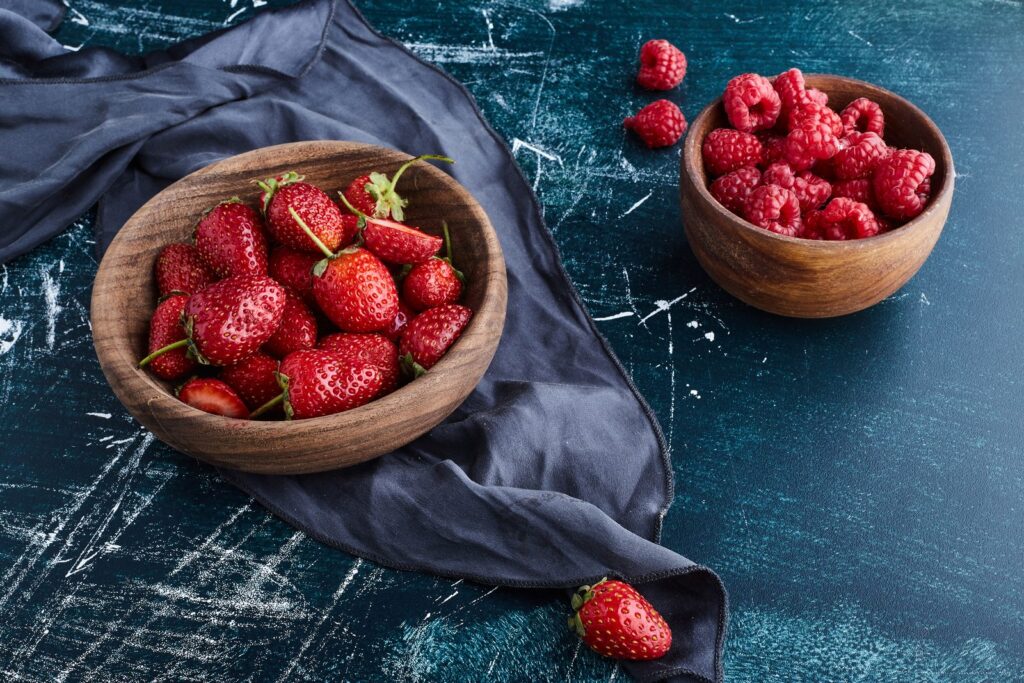
Among the fruits people actually eat, the starfruit is the least sugary with 3.8 g of sugars per 100 g, followed by honeydew melon (4.3 g), raspberry (5.4 g) and strawberry (5.6 g). At the other end, grapes, lychee and banana exceed 15 g, three to four times more. Two surprises: watermelon, with its very sweet taste, has only 7.9 g of sugars, less than an apple, and Charentais melon has 2.5 times more than honeydew melon.
The least sugary fruits
| Fruit | Sugars per 100 g | Calories | Fibre |
|---|---|---|---|
| Starfruit | 3.8 g | 28 kcal | 2.8 g |
| Honeydew melon | 4.3 g | 22 kcal | 0.8 g |
| Raspberry | 5.4 g | 48 kcal | 4.3 g |
| Strawberry | 5.6 g | 35 kcal | 3.8 g |
| Blackberry | 6.1 g | 46 kcal | 5.2 g |
| Loquat | 6.1 g | 48 kcal | 1.7 g |
| Quince | 6.3 g | 59 kcal | 1.9 g |
| Redcurrant | 6.6 g | 67 kcal | 4.6 g |
| Apricot | 6.7 g | 44 kcal | 1.7 g |
| Orange | 7.6 g | 42 kcal | 2.7 g |
| Peach | 7.7 g | 44 kcal | 1 g |
| Watermelon | 7.9 g | 35 kcal | 0.5 g |
| Papaya | 8.1 g | 40 kcal | 1.8 g |
| Passion fruit | 8.5 g | 102 kcal | 6.8 g |
| Clementine or mandarin | 8.6 g | 46 kcal | 1.7 g |
| Nectarine | 8.8 g | 50 kcal | 0.5 g |
| Kiwi | 8.9 g | 61 kcal | 2.4 g |
| Guava | 8.9 g | 68 kcal | 5.4 g |
Red berries, the best allies
Raspberry, strawberry, blackberry and redcurrant stay under 7 g of sugars per 100 g, with plenty of fibre: 4.3 g for raspberry, 5.2 g for blackberry. A 150 g bowl of strawberries provides 8.4 g of sugars, less than half a banana.
Citrus fruits, less sugary than you might think
Orange (7.6 g) and clementine (8.6 g) are clearly less sugary than apple (11.4 g). Lemon (0.8 g) and lime (2.1 g) are the least sugary fruits in the whole table, but they are used as a condiment more than they are eaten.
The sweetest fruits
| Fruit | Sugars per 100 g | Calories | Fibre |
|---|---|---|---|
| Chasselas grapes | 16.5 g | 78 kcal | 2 g |
| Lychee | 15.7 g | 78 kcal | 2 g |
| Banana | 15.6 g | 88 kcal | 2.7 g |
| Grapes | 15.4 g | 71 kcal | 1.1 g |
| Persimmon | 13.9 g | 66 kcal | 3.4 g |
| Pomegranate | 13.3 g | 81 kcal | 2.3 g |
| Mirabelle plum | 13.3 g | 75 kcal | 2.2 g |
| Mango | 12.9 g | 71 kcal | 1.6 g |
| Fresh fig | 12.2 g | 68 kcal | 4.1 g |
| Apple | 11.4 g | 51 kcal | 2.4 g |
| Charentais melon | 10.6 g | 60 kcal | 1.3 g |
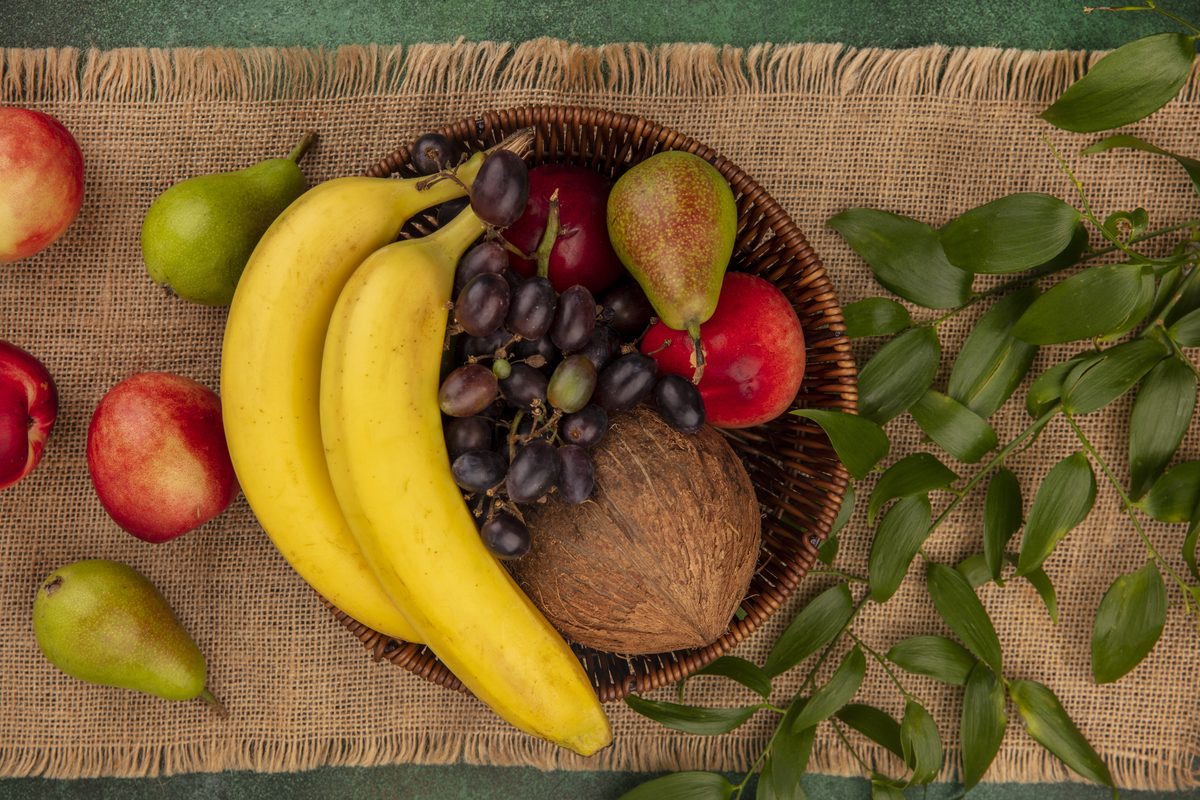
These fruits are not to be avoided: they provide fibre, vitamins and potassium, as our guide to foods high in potassium shows for the banana. But if you are watching your sugar intake, a bunch of grapes or a banana do not weigh the same as a bowl of strawberries.
Taste is deceiving
The sensation of sweetness does not follow sugar content. Watermelon seems very sweet and contains only 7.9 g per 100 g, less than an apple. Honeydew melon has 4.3 g, Charentais melon 10.6 g: two melons, two profiles. Conversely, the Granny Smith apple, tart in the mouth, contains 10.1 g of sugars, almost as much as a Golden (11.5 g). Acidity masks sugar; it does not replace it.
How much sugar per day
For adults, Anses sets a limit of 100 g of total sugars per day, excluding lactose and galactose from milk, counting the sugars from fruit. The WHO, for its part, recommends limiting free sugars, those added and those in fruit juices, to less than 10% of energy, or 50 g for 2,000 kcal. The sugars in a whole fruit are not part of this.
To give a sense of scale: three 150 g portions of fruit, for example strawberries, an orange and an apple, provide about 37 g of sugars. That is well within the limit, with fibre as a bonus. It is fruit juice that causes trouble: it concentrates the sugar without the fibre. The link with blood sugar is covered in our guide to the glycaemic index, and the case of added sugars in the one on hidden sugar.
Diabetic? Our guide on apple and diabetes covers the glycaemic index of apple, juice and compote.
Frequently asked questions
Which fruit is the least sugary?
Among fruits eaten as they are, the starfruit with 3.8 g of sugars per 100 g, then honeydew melon (4.3 g). Lemon (0.8 g) is even lower, but is used as a condiment.
Which fruits should you eat when watching your sugar?
Red berries (raspberry, strawberry, blackberry, redcurrant), citrus fruits, watermelon, papaya and kiwi, all under 9 g of sugars per 100 g.
Which fruit is the sweetest?
The Chasselas grapes (16.5 g per 100 g), followed by lychee and banana, at around 15.6 g.
Is watermelon very sweet?
No: 7.9 g of sugars per 100 g, less than apple (11.4 g). Its taste is misleading.
Is melon sweet?
It depends on the melon: 4.3 g per 100 g for honeydew melon, 10.6 g for Charentais melon, according to Ciqual.
What is the maximum amount of sugar per day?
Anses sets a limit of 100 g of total sugars per day for adults, excluding lactose and galactose. Three fruits provide about 35 to 40 g.
The other rankings
Same method, based on the Ciqual table: foods high in iron, foods high in magnesium, foods high in potassium, foods high in calcium, foods high in zinc, foods high in selenium, foods high in iodine, foods high in vitamin B12, foods high in vitamin C, foods high in vitamin D, foods high in omega-3, highest-protein foods, vegetables high in fibre.
Our sources
- Ciqual 2025 table (Anses), Sugars, Energy and Dietary fibre columns, cross-checked with the site’s food pages.
- Anses, Établissement de recommandations d’apport de sucres, collective expert report, 2016.
- WHO, Guideline: sugars intake for adults and children, 2015.